

Post-accident rehab is defined as a multidisciplinary recovery process that restores physical function and psychological well-being after an automobile accident. The industry term for this process is post-injury rehabilitation, and it covers far more than rest and pain medication. It addresses whiplash, soft-tissue damage, joint injuries, concussions, and trauma-related conditions like PTSD and driving anxiety. Recognized standards from bodies like the State Insurance Regulatory Authority (SIRA) confirm that tailored treatment plans produce measurably better outcomes than generic care. SIRA data shows 70% of accident patients return to work within eight weeks when they receive appropriate treatment. That figure drops sharply without structured rehab.
What is post-accident rehab and how does it work?
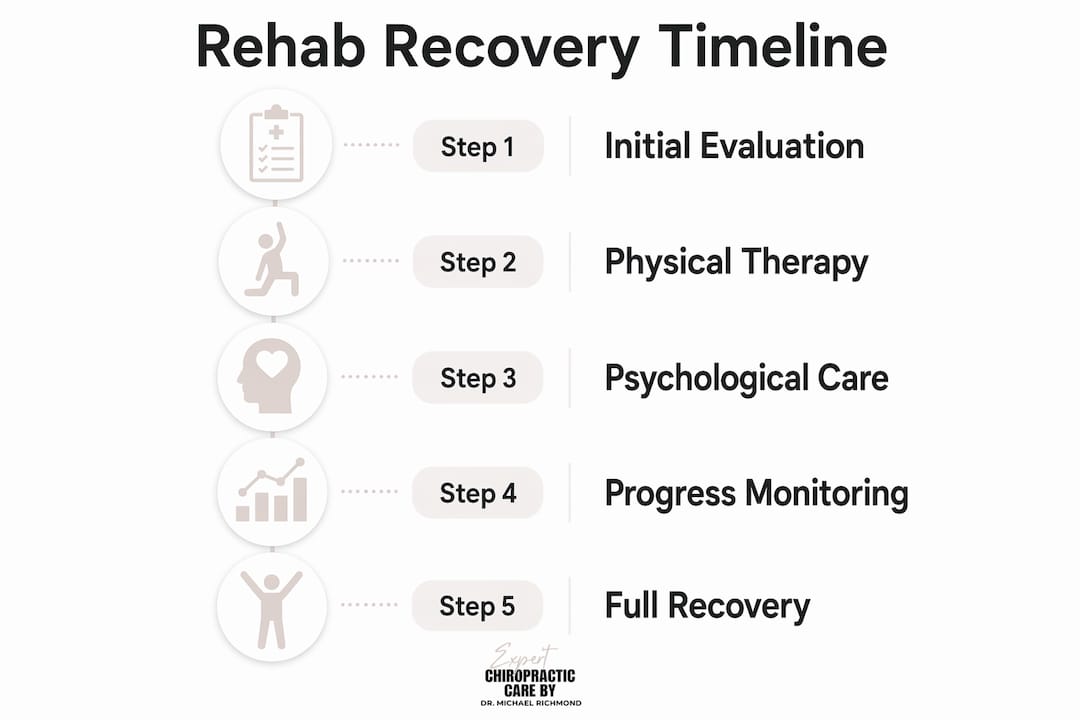
Post-injury rehabilitation is a multidisciplinary approach combining manual therapy, chiropractic adjustments, physical therapy, and psychological interventions tailored to each healing stage. Treatment is not static. It evolves as your body recovers, moving from pain control in the first days to full functional restoration weeks later.
The four core recovery stages
-
Acute phase (days 1–7). The priority is reducing inflammation and protecting injured tissue. Treatments include ice therapy, gentle mobilization, and pain management. Providers assess the full extent of injury during this window.
-
Early rehabilitation (weeks 1–3). Manual therapy and light mobility exercises begin here. The goal is restoring basic range of motion without overloading healing structures.
-
Active rehabilitation (weeks 3–8). Graded loading exercises rebuild tissue strength progressively. Functional retraining becomes the primary focus, not just symptom relief. Chiropractic adjustments address joint mechanics and reduce scar tissue buildup.
-
Full recovery and return to activity (weeks 8 onward). Patients progress to sport-specific or work-specific conditioning. Discharge planning includes self-management strategies to prevent relapse.
Physical therapy techniques used in each stage
- Manual therapy: Hands-on joint mobilization and soft-tissue release to reduce stiffness and restore movement.
- Graded loading: Controlled, progressive resistance exercises that rebuild muscle and connective tissue without re-injury.
- Mobility restoration: Stretching and range-of-motion protocols targeting the cervical spine, shoulders, and lumbar region.
- Chiropractic adjustments: Chiropractic care improves joint mechanics, reduces inflammation, and rebuilds strength and function after collision trauma.
Pro Tip: Ask your provider to explain which stage you are in and what the measurable goal is for the next two weeks. Patients who understand their own progress milestones adhere to treatment longer and recover faster.
How does psychological rehabilitation fit into post-accident recovery?

Psychological rehab is not optional. Accident trauma is distinct from general anxiety because it combines physical injury with sudden, unexpected threat to life. Trauma therapy after accidents addresses specific symptoms including brain injury concerns, legal process stress, and the acute shock of the collision itself. General anxiety therapy does not cover these dimensions.
Common psychological symptoms that require targeted treatment include:
- PTSD and intrusive memories triggered by driving, loud noises, or news reports about accidents.
- Driving anxiety and avoidance, which can prevent patients from returning to work or normal life.
- Hypervigilance in vehicles, causing chronic muscle tension that slows physical recovery.
- Depression and grief related to lost function, income, or independence.
Evidence-based therapies used in post-accident psychological rehab include Eye Movement Desensitization and Reprocessing (EMDR), Cognitive Processing Therapy (CPT), Prolonged Exposure therapy, and Trauma-Focused Cognitive Behavioral Therapy (TF-CBT). Each targets trauma differently. EMDR processes distressing memories through bilateral stimulation. CPT challenges unhelpful beliefs formed after the accident. Prolonged Exposure reduces avoidance through gradual, controlled confrontation with feared situations.
Early identification of psychological symptoms reduces chronic anxiety and promotes confidence return. Patients who delay psychological care often develop entrenched avoidance patterns that are harder to treat at six months than at six weeks.
Pro Tip: Telehealth psychological therapy is widely available and covered by many auto insurance policies. If in-person appointments feel difficult, a video session with a trauma-trained therapist is a clinically valid alternative.
What practical steps should you take after an accident?
Speed matters in the accident recovery process. Soft-tissue and concussion symptoms often appear days after a crash because adrenaline masks pain at the scene. Delaying assessment by even a week increases the risk of chronic dysfunction significantly.
Seek evaluation within 72 hours
A medical evaluation within 72 hours of the accident is the single most important post-accident recovery step. Providers assess for:
- Neck pain and reduced cervical range of motion (common in whiplash)
- Headaches or dizziness (possible concussion indicators)
- Numbness or tingling in the arms or legs (nerve involvement)
- Lower back pain or hip stiffness (lumbar and sacroiliac joint injury)
Do not wait for symptoms to become severe before seeking care. Many injuries that feel minor at day one become chronic conditions by month three without treatment.
Choose the right rehabilitation provider
A qualified rehabilitation team for auto accident injuries typically includes a chiropractor, a physical therapist, and a psychologist or counselor with trauma training. Look for providers who communicate with each other and coordinate your care plan. Fragmented care, where each provider works independently, produces slower and less complete recovery.
Stay consistent and progress gradually
Treatment adherence is the strongest predictor of recovery speed. Attend every scheduled appointment, complete home exercise programs, and communicate openly when pain levels change. Gradual activity progression, not complete rest, is the evidence-based standard. Extended bed rest weakens muscles and delays tissue healing.
Family and caregiver support must balance practical help with encouraging independence. Doing everything for a recovering patient creates long-term dependency. The goal is to support function, not replace it.
Pro Tip: Keep a daily symptom journal during the first four weeks. Note pain levels, sleep quality, and mood. This record helps your provider adjust treatment faster and documents your recovery for insurance purposes.
What injuries and recovery timelines are common in post-accident rehab?
Recovery timelines vary by injury type, patient age, pre-existing conditions, and how quickly treatment begins. The table below summarizes common injury categories and typical recovery windows.
| Injury type | Common symptoms | Typical recovery window |
|---|---|---|
| Minor soft-tissue (Grade I whiplash) | Mild neck stiffness, soreness | 2–6 weeks |
| Moderate soft-tissue (Grade II whiplash) | Reduced range of motion, headaches | 6–12 weeks |
| Joint and disc injuries | Radiating arm or leg pain, numbness | 3–6 months |
| Concussion (mild TBI) | Dizziness, cognitive fog, light sensitivity | 4–12 weeks |
| Severe spinal or fracture injuries | Significant pain, neurological symptoms | 6 months or longer |
Several factors extend recovery beyond these windows. Older patients heal more slowly due to reduced tissue regeneration. Pre-existing conditions like degenerative disc disease or arthritis amplify injury severity. Inadequate or delayed rehab is the most controllable factor. Patients who skip treatment or stop early face higher rates of chronic pain and post-traumatic arthritis.
The risks of inadequate rehab are not theoretical. Untreated whiplash can progress to chronic cervicogenic headaches. Unaddressed joint irritation leads to compensatory movement patterns that damage adjacent structures over time. Starting chiropractic tips and care early in the recovery process directly reduces these long-term risks.
Key Takeaways
Post-accident rehab is a staged, multidisciplinary process that addresses both physical injuries and psychological trauma to restore full function after an automobile accident.
| Point | Details |
|---|---|
| Start within 72 hours | Early evaluation prevents acute injuries from becoming chronic conditions. |
| Rehab has four stages | Treatment progresses from acute pain control through graded loading to full functional restoration. |
| Psychology is not optional | EMDR, CPT, and TF-CBT treat driving anxiety and PTSD that physical therapy cannot address. |
| Consistency drives outcomes | SIRA data shows 70% of patients return to work within eight weeks with appropriate, consistent treatment. |
| Caregiver support needs balance | Helping too much creates dependency; the goal is to support independence, not replace it. |
What I've learned about recovery that most guides get wrong
Most articles on post-accident recovery focus almost entirely on physical treatment. That framing misses half the picture. In my experience working with accident patients, the ones who plateau at week six are almost never failing physically. They are avoiding driving, sleeping poorly, and dreading appointments. The psychological component is not a secondary concern. It is often the rate-limiting factor in recovery.
The other mistake I see constantly is patients stopping treatment the moment pain decreases. Pain reduction is not the same as functional recovery. Tissue is still healing. Strength is still rebuilding. Stopping at 60% recovery because you feel 80% better is how chronic problems develop. Rehab programs for injuries are designed to take you to full function, not just comfort.
Early intervention and coordinated care are not just best practices. They are the difference between a six-week recovery and a six-month one. Patients who engage a chiropractor, physical therapist, and trauma-aware psychologist within the first two weeks consistently outperform those who piece together care reactively. The body and mind heal together. Treat them that way.
— Spark
Sparkmed's resources for post-accident recovery
Recovering from a car accident raises a lot of questions, and finding reliable answers quickly matters. Sparkmed specializes in chiropractic care for accident patients in North Miami, offering spinal adjustments and treatment plans built around each patient's specific injuries and recovery stage.
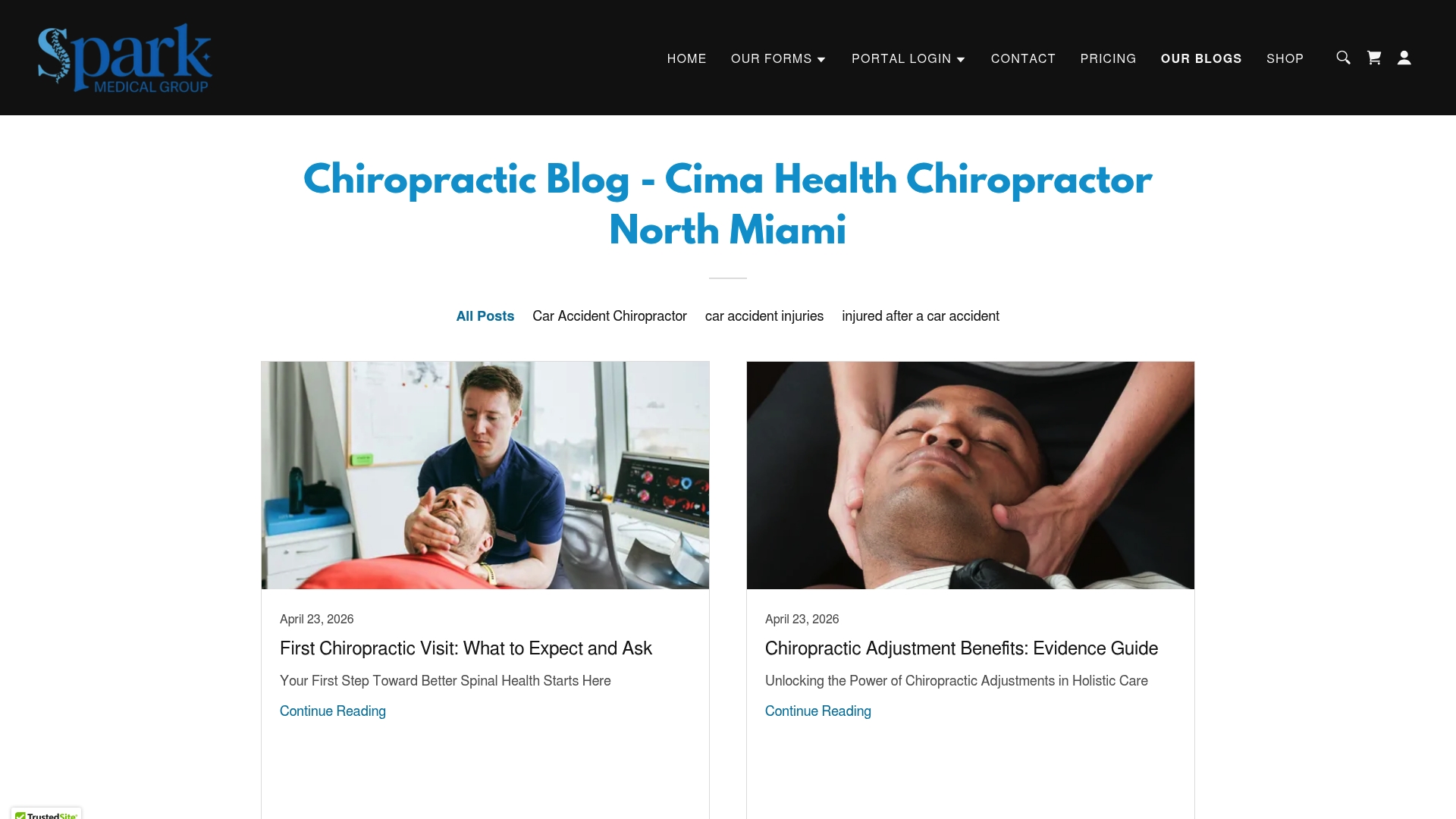
Sparkmed's blog covers the full range of post-accident rehab topics, from understanding your injury type to knowing what to expect at each stage of care. Patients can access educational content in English, Spanish, and Creole. Sparkmed also offers a $25 chiropractic adjustment that does not require insurance, making early evaluation accessible regardless of your coverage situation. Visit Sparkmed's blog to find clear, practical guidance written for people navigating recovery after an accident.
FAQ
What is post-accident rehab?
Post-accident rehab is a multidisciplinary recovery process combining physical therapy, chiropractic care, and psychological treatment to restore function after an automobile accident. It is tailored to injury severity and progresses through defined stages from acute care to full activity.
How soon should rehab start after an accident?
Evaluation should happen within 72 hours of the accident. Soft-tissue and concussion symptoms often appear days after the crash, and delaying assessment increases the risk of chronic injury.
Does post-accident therapy include mental health treatment?
Yes. Evidence-based therapies like EMDR, CPT, and Prolonged Exposure treat PTSD, driving anxiety, and avoidance behaviors that are common after automobile accidents. Psychological care is a recognized component of complete post-injury rehabilitation.
How long does post-accident recovery take?
Recovery timelines range from two to six weeks for minor soft-tissue injuries to six months or longer for severe spinal or fracture injuries. Age, pre-existing conditions, and treatment consistency all affect the timeline.
Can I do rehab without insurance?
Yes. Many providers, including Sparkmed, offer affordable evaluation and treatment options that do not require insurance coverage. Early care is always less costly than treating a chronic condition that develops from delayed rehab.