
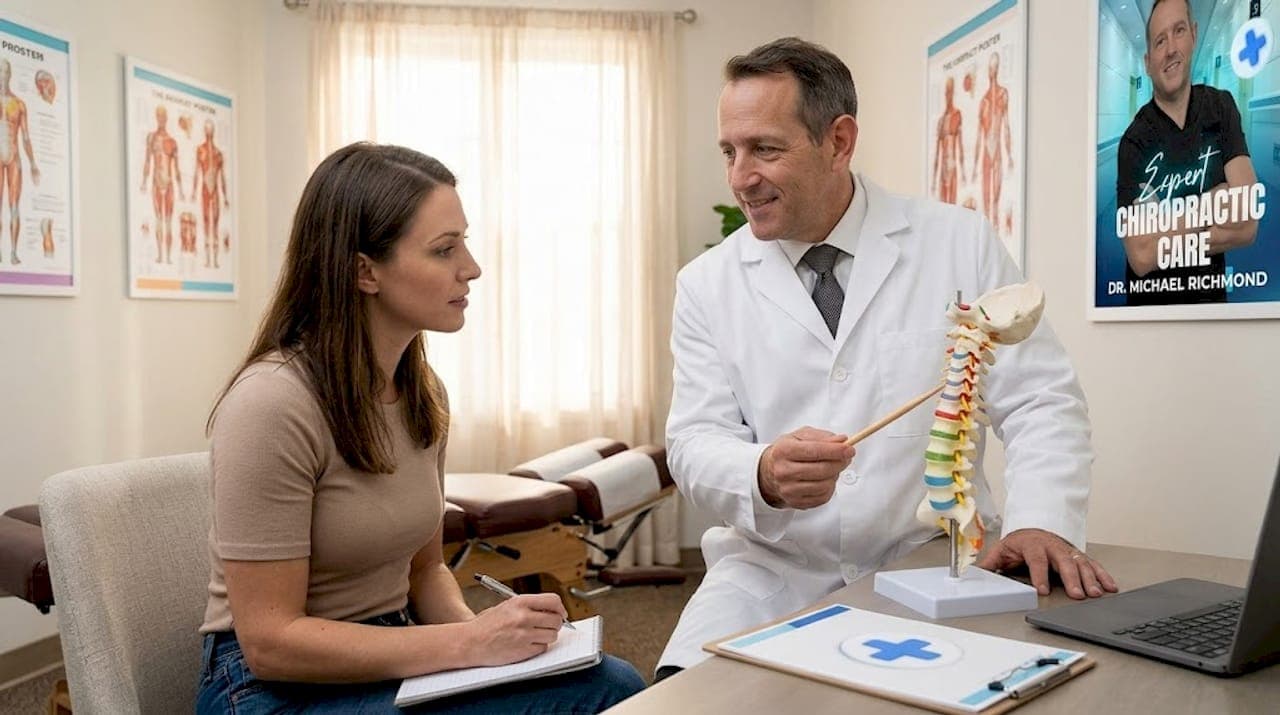
After a car accident in North Miami, the last thing you need is bad information steering you away from real relief. Misinformation about chiropractic care is everywhere, and it causes accident victims to delay treatment, suffer longer, and sometimes develop chronic conditions that could have been avoided. The myths range from fear-based claims about strokes and pain to the frustrating belief that chiropractic is only useful for backaches. This article tackles each of those myths directly, using current research, so you can make a confident, informed decision about your recovery.
Table of Contents
- What are the most common chiropractic care myths?
- Myth #1: Chiropractic care isn't safe after an auto accident
- Myth #2: Chiropractic adjustments are dangerous or cause strokes
- Myth #3: Chiropractic care is only for back pain and you have to keep going forever
- Myth #4: Chiropractic treatment is ineffective for auto accident injuries
- A smarter way to recover: Why balance matters more than myths
- Connect with experts for your recovery journey
- Frequently asked questions
Key Takeaways
| Point | Details |
|---|---|
| Chiropractic safety | Most side effects are mild and serious complications are very rare after screening. |
| Myths debunked | Myths like 'danger' or 'endless care' aren’t supported by research or guidelines. |
| Evidence for recovery | Early, multimodal chiropractic care improves whiplash and spinal health after accidents. |
| Individualized plans work | Best results happen with personalized, targeted treatment—not a one-size-fits-all approach. |
| Expert support matters | Professional advice and up-to-date information are key for a strong recovery after an auto accident. |
What are the most common chiropractic care myths?
Understanding which myths are actually circulating helps you recognize when bad advice might be influencing your choices. These misconceptions are not just harmless misunderstandings. They actively delay treatment and reduce the chances of a full recovery after an accident.
The five biggest myths accident victims hear are:
- "Chiropractic care is not safe" — especially after trauma like a car crash
- "Adjustments are always painful" — so why endure them?
- "It's only for back pain" — not for neck injuries, whiplash, or headaches
- "You'll have to keep going forever" — treatment never really ends
- "Spinal manipulation causes strokes" — a fear that keeps many people away entirely
Each of these myths distorts real decisions. A person afraid of strokes skips the consultation entirely. Someone who thinks care only addresses back pain never mentions their persistent headaches. Someone convinced treatment is endless never starts at all.
If some of the terminology around adjustments and spinal care feels unfamiliar, getting chiropractic jargon explained can make conversations with your provider much more productive.
Research perspective: Adverse events from chiropractic spinal manipulation are mostly mild to moderate in nature, such as temporary soreness or stiffness, and serious events are rare across the studied populations.
With the confusion made clear, let's work through each myth in detail.
Myth #1: Chiropractic care isn't safe after an auto accident
Now let's take a closer look at the top myth: safety concerns after a car accident. This one stops more people from seeking help than almost any other misconception.

The current evidence is reassuring. Studies confirm that adverse events from spinal manipulation are mostly mild to moderate, things like short-term soreness or stiffness after the first few sessions. Serious or catastrophic events are extremely rare, particularly when a licensed provider follows proper screening protocols.
Here is what safety looks like in a real auto accident scenario:
- Red flag screening happens before any adjustment. Providers check for fractures, joint instability, vascular risks, and neurological warning signs before they lay hands on you.
- Informed consent means your provider explains what they will do and why, giving you full control over your care.
- Gradual progression means adjustments start gentle and become more targeted as your body responds.
- Post-adjustment monitoring catches any unexpected reaction quickly so the plan can be modified.
Pro Tip: Early chiropractic intervention after a crash, usually within the first two weeks, significantly reduces the risk of developing long-term chronic pain. The window after an accident is when the body is most responsive to realignment and soft tissue care.
The concept of safety in mechanical correction has been studied extensively, and the data consistently shows the risk profile is low when care is delivered by trained professionals. Understanding chiropractic care for recovery helps frame what a properly managed treatment plan actually looks like.
Myth #2: Chiropractic adjustments are dangerous or cause strokes
Having addressed general safety, let's focus on the stroke myth that causes a lot of fear for accident victims. This is the claim that gets repeated the most online, often without the full picture.
The actual risk is extraordinarily small. Research on cervical (neck) spinal manipulation places the stroke risk at approximately 1 per million procedures. To put that in perspective, many everyday activities, including taking certain over-the-counter medications or sitting for long periods, carry comparable or higher risk profiles.
A few important nuances:
- Pre-existing conditions matter. Most reported stroke cases involved individuals who already had undiagnosed vascular issues, such as arterial dissection, before they visited a provider. The adjustment did not cause the stroke, but it was incorrectly blamed because it happened nearby in time.
- Neck pain itself can precede vascular events. Patients often seek chiropractic care for neck pain that is already a warning sign of a vascular problem, which makes it easy to confuse cause and effect.
- Screening is the standard of care. Responsible chiropractors perform vascular and neurological screening before working on the cervical spine. This is not optional, it is expected.
- Informed consent is non-negotiable. Your provider should discuss any rare risks openly before proceeding with cervical manipulation.
If you want to understand the effective post-accident methods used today, you will see that modern chiropractic practice is built around evidence, screening, and patient safety above all else.
Myth #3: Chiropractic care is only for back pain and you have to keep going forever
With risks clarified, it's time to challenge the myth that chiropractic care is only for back pain or requires endless appointments. Both parts of this myth are wrong, and both are worth taking apart.
Chiropractic care treats far more than the lower back. After a car accident, the most common injuries include:
- Whiplash — rapid flexion-extension injury to the cervical spine
- Neck pain and stiffness — often from seat belt tension during impact
- Tension headaches and cervicogenic headaches — stemming from cervical joint dysfunction
- Mid-back pain — from bracing at the moment of collision
- Radiating nerve pain — caused by disc irritation or joint misalignment
Spinal manipulation provides short-term pain relief and functional improvement for both low back and neck pain, and the American College of Physicians (ACP) and Cochrane reviews recommend it as a first-line treatment option. That is not fringe medicine. That is mainstream guidance.
For whiplash specifically, the research shows that multimodal care for WAD, which means combining spinal manipulation with exercise and self-management, produces the best outcomes. Single-modality treatment is less effective. A good chiropractor coordinates a team approach.
| Condition | Chiropractic benefit | Recommended additions |
|---|---|---|
| Low back pain | Pain reduction, improved mobility | Exercise, heat therapy |
| Whiplash (neck) | Reduced stiffness, alignment support | Exercise, self-management |
| Cervicogenic headaches | Decreased frequency and intensity | Soft tissue work, posture training |
| Mid-back tension | Restored range of motion | Stretching, ergonomics coaching |
As for the "forever" myth, care duration is driven by your injury, your recovery response, and your functional goals. A straightforward whiplash case might resolve in 8 to 12 sessions. A more complex multi-impact injury might require a longer, structured plan. But "forever" is not a care plan. It is an absence of one.
Pro Tip: Ask your provider to set specific functional goals at the start of your plan, such as "full cervical rotation by week 6" or "return to work without pain by week 10." If goals are never defined, neither is the endpoint.
Learning about different treatment types and how back pain relief fits into a broader plan gives you the knowledge to participate actively in your own care.
Myth #4: Chiropractic treatment is ineffective for auto accident injuries
If care isn't just for back pain, the next myth to bust is whether it even works for auto injuries. Here's what the research says.
Early chiropractic intervention after a motor vehicle collision actively prevents the development of chronic conditions. Studies using Chiropractic Biophysics (CBP) methods showed measurable improvements in spinal alignment alongside reduced pain and disability in whiplash cases that had persisted beyond three months. That is significant because it means chiropractic intervention helped even in cases where people had already been struggling for a long time.
The difference between early and delayed care is also measurable. Consider the contrast:
| Intervention timing | Typical outcome | Chronic pain risk |
|---|---|---|
| Within 2 weeks post-accident | Faster recovery, less scar tissue | Low |
| 4 to 8 weeks post-accident | Moderate improvement, more sessions needed | Moderate |
| Beyond 3 months post-accident | Longer treatment course, reduced flexibility outcomes | Higher |
What should you expect from a well-designed, multimodal recovery plan?
- Spinal adjustments to correct joint dysfunction and restore range of motion
- Soft tissue therapy for muscle tension and scar tissue reduction
- Rehabilitative exercises to rebuild strength and prevent re-injury
- Self-management guidance so your progress continues between visits
- Progress tracking with updated assessments every few weeks
Understanding long-term wellness support after an accident and how chiropractic follow-up accelerates the healing timeline helps set realistic expectations for anyone starting care. The evidence also lines up with the multimodal whiplash treatment guidelines, which call for a combination of manual therapy, exercise, and patient education as the gold standard.
A smarter way to recover: Why balance matters more than myths
Now that we've debunked the common myths, here's what most accident recovery guides miss entirely.
The conversation around chiropractic care tends to get stuck in two camps. One side insists it works and is completely safe. The other side emphasizes rare risks and questions the evidence base. Neither extreme actually serves you as a patient. What serves you is the middle ground, where a qualified provider evaluates your specific injury, screens appropriately, and builds a plan that combines the best tools available.
We have seen patients in North Miami who waited months to seek care because someone told them chiropractors were dangerous. By the time they arrived, their soft tissue injuries had become chronic, their range of motion had decreased, and what would have been a straightforward 10-session plan became a much longer road. That delay was caused by misinformation, not by the injury itself.
We have also seen patients who came in expecting one type of adjustment they read about online, and were frustrated when their provider recommended a broader plan including exercise and massage therapy. Recovery is not about one technique. It is about what your body actually needs after the trauma it experienced.
The most well-rounded view acknowledges that, as evidence-based guidelines confirm, chiropractic care is a proven conservative option after proper screening, and it works best as part of an integrated approach. Progress toward functional goals, not just temporary pain suppression, is the real marker of successful recovery.
Pro Tip: Ask your practitioner to explain not only what they are doing during each session, but why that specific technique fits your injury stage. And ask who else might add value to your recovery, whether that is a massage therapist, a physical therapist, or a pain management specialist.
Exploring the full range of wellness benefits after accidents gives you a more complete picture of what integrated recovery looks like in practice.
Connect with experts for your recovery journey
After a car accident, the decisions you make in the first few weeks set the tone for everything that follows. Understanding what chiropractic care actually involves, what the research supports, and what questions to ask puts you in a far stronger position than someone operating on myths.
At Spark Medical, we specialize in post-accident chiropractic care for the North Miami community. Our practitioners screen thoroughly, explain every step, and build individualized plans that prioritize your functional recovery. Whether you need a first evaluation or want to learn more before making a decision, our auto accident recovery advice covers the topics that matter most to accident victims like you. A $25 chiropractic adjustment is available without insurance, so cost is never a reason to wait.
Frequently asked questions
Is chiropractic care safe for older adults after a car accident?
Chiropractic care is generally safe for older adults, with most side effects being mild, and major complications are rare when thorough screening protocols are followed before treatment.
Does spinal manipulation actually help with whiplash recovery?
Early chiropractic intervention combined with exercise and self-care supports strong recovery from whiplash, with CBP methods showing measurable improvement in alignment and reduced pain even in chronic cases.
How common are serious complications from chiropractic adjustments?
Serious complications are extremely rare, and most adverse reactions are mild and temporary, typically limited to soreness or stiffness that resolves within a day or two.
Will I have to get chiropractic care forever if I start after a car crash?
Duration of care depends entirely on your injury and recovery goals. Most treatment plans are structured and time-limited, not open-ended.
Can chiropractic care be combined with other therapies for better results?
Yes, multimodal care that combines spinal manipulation, exercise, and self-management consistently produces better outcomes for auto accident injuries than any single treatment alone.