
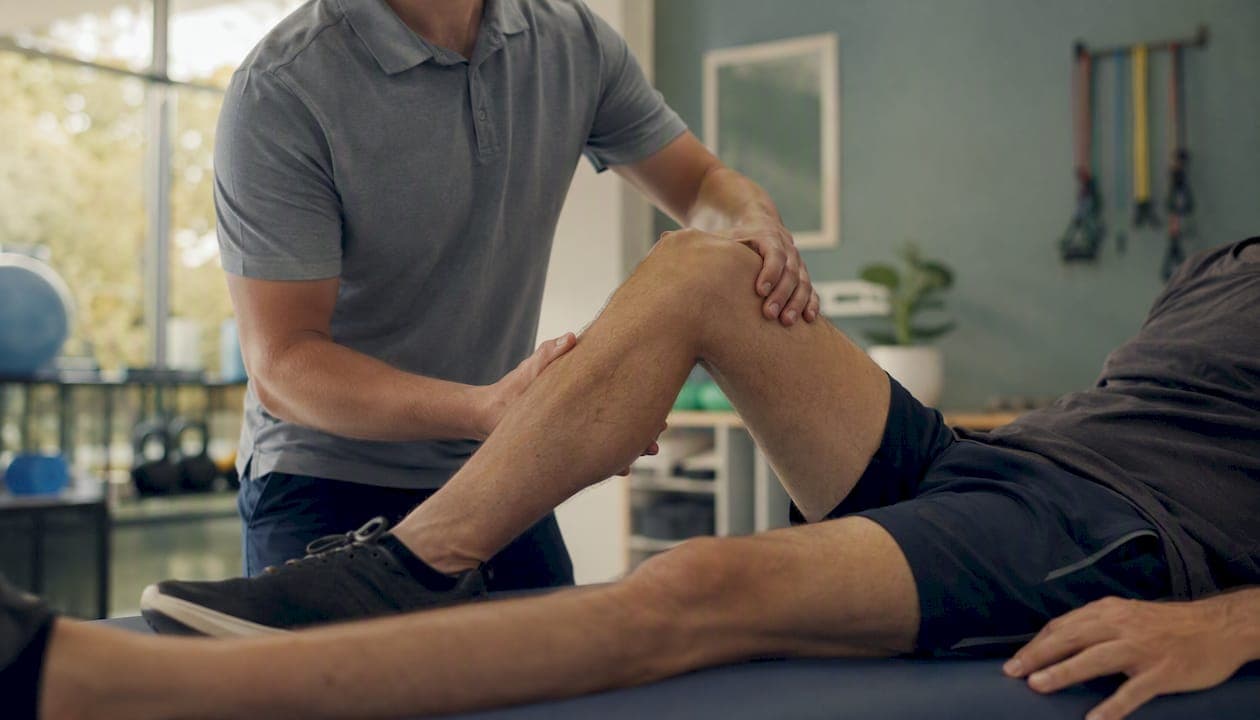
Rehabilitation is the fastest route from injury or surgery back to the life you had before. The World Health Organization defines rehabilitation as a set of interventions designed to optimize functioning and reduce disability in people with health conditions, and estimates that billions of people worldwide could benefit from it. If you are recovering right now, the single most useful thing you can do today is ask your treating clinician for a formal rehabilitation referral, or book an initial evaluation at a clinic like Sparkmed in North Miami.
- Rehabilitation restores physical function, reduces long-term disability, and speeds return to daily life.
- Early access matters: the sooner rehab starts after injury or surgery, the better the outcomes tend to be.
- A team of specialists, not a single provider, drives the best results.
- Modifiable factors like adherence, sleep, and home exercise give you real control over your recovery.
Key Takeaways
Rehabilitation restores function, reduces long-term disability, and improves return-to-home rates when started early and continued across the full care continuum.
| Point | Details |
|---|---|
| Start early | Early rehab access reduces long-term disability; request a referral within days of injury or surgery. |
| Team-based care | A multidisciplinary team covering PT, OT, SLP, and social work drives faster, more complete recovery. |
| Five-stage pathway | Progress through diagnosis, inflammation control, healing, fitness, and return-to-activity using milestone benchmarks. |
| Modifiable factors | Adherence, sleep, nutrition, and mental health support are within your control and directly affect outcomes. |
| Sparkmed in North Miami | Affordable chiropractic and rehab care from $25, no insurance required, with multilingual support and Uber Health transport. |
Table of Contents
- What does rehabilitation actually mean?
- What does the research show about rehabilitation's impact on healing?
- Who is on a rehabilitation team?
- What are the stages of a typical rehabilitation pathway?
- What treatments will you receive during rehabilitation?
- Which factors determine how well you recover?
- How long does rehabilitation take, and what does it cost in the U.S.?
- How does rehabilitation fit into hospital and ICU care?
- When should you start rehabilitation, and what are the red flags?
- Sparkmed offers affordable post-injury rehabilitation in North Miami
- Sources
What does rehabilitation actually mean?
That definition covers far more than physical therapy after a knee replacement. Rehabilitation addresses any condition, from stroke to spinal cord injury to car accident trauma, where function has been lost or threatened. The core goals are consistent: restore or maximize physical and cognitive function, reduce pain and disability, and return you to meaningful daily roles, whether that means going back to work, caring for your family, or simply walking to the mailbox without help.
According to MedlinePlus, services are delivered across a range of settings:
- Acute hospital care: rehab starts while you are still admitted, often within 24–48 hours of a procedure or injury.
- Inpatient rehabilitation facility: for patients who need intensive daily therapy but are not ready to go home.
- Outpatient clinic: the most common setting for orthopedic, neurologic, and post-accident recovery.
- Home and community: for patients with mobility barriers or those transitioning from inpatient care.
What does the research show about rehabilitation's impact on healing?
The evidence is clear: rehabilitation started early and continued across the care continuum improves function, reduces long-term disability, and can shorten hospital stays or cut readmission rates. A comprehensive review on NCBI Bookshelf confirms that rehab programs across acute, subacute, and long-term settings optimize outcomes after surgery, trauma, stroke, and chronic disease.
The scale of unmet need is striking. The WHO estimates that a very large number of people globally are living with a condition that could benefit from rehabilitation, yet access remains limited in many settings.
For patients recovering from major illness or surgery, the practical benefits break down like this:
- Regained independence in daily activities (dressing, walking, driving)
- Reduced risk of secondary complications such as muscle atrophy, joint stiffness, and pressure injuries
- Higher likelihood of discharge to home rather than a long-term care facility
- Lower rates of hospital readmission when outpatient rehab follows inpatient care
Pro Tip: Ask your discharge planner specifically about outpatient rehab before you leave the hospital. Gaps between inpatient and outpatient care are one of the most common reasons recovery stalls.
Who is on a rehabilitation team?
The team is multidisciplinary and organized around your specific functional goals, not just your diagnosis. Each professional addresses a different dimension of recovery:
- Physiatrist or rehabilitation physician: oversees the medical plan, coordinates the team, and manages pain or complications.
- Physical therapist (PT): evaluates movement, strength, and balance; designs and progresses your therapeutic exercise program.
- Occupational therapist (OT): focuses on activities of daily living (ADLs), fine motor skills, and adaptive equipment.
- Speech-language pathologist (SLP): addresses swallowing, communication, and cognitive function after neurologic injury.
- Social worker or case manager: handles discharge planning, insurance navigation, and community resource referrals.
- Nursing staff: monitors wound healing, medication adherence, and patient education during inpatient stays.
Pro Tip: When you call to book your first appointment, ask whether the clinic uses an interprofessional care model. A team that communicates across disciplines moves faster than a single provider working in isolation. You can also ask for a holistic injury care approach that addresses both physical and psychosocial recovery.
What are the stages of a typical rehabilitation pathway?
Recovery follows a predictable sequence of milestones, not a fixed calendar. Sports medicine literature describes a five-step rehabilitation model that transfers well beyond athletic injuries:
- Diagnosis and baseline assessment: identify the injury, measure baseline function, and set realistic goals.
- Control inflammation: manage swelling, pain, and tissue irritation to create conditions for healing. See practical strategies for reducing inflammation after an accident.
- Promote healing: guided movement and controlled loading align collagen fibers and support tissue repair.
- Increase fitness: progressive strengthening, cardiovascular conditioning, and neuromuscular training rebuild capacity.
- Control abusive load and prevent reinjury: sport- or activity-specific training under supervision before full return.
Milestone checklist to track your progress:
- Pain at rest: resolved or well-controlled before advancing to the next stage
- Range of motion: within 10–15 degrees of the uninjured side before loading
- Strength: typically a high percentage of the uninjured limb before return-to-activity clearance
- Functional benchmarks: single-leg balance, task-specific movement patterns, or work-simulation tasks depending on your goal
| Stage | Clinical Focus | Readiness Signal |
|---|---|---|
| Diagnosis and assessment | Identify injury, set goals | Baseline measures documented |
| Control inflammation | Pain and swelling management | Pain at rest resolved |
| Promote healing | Guided movement, tissue repair | Full passive range of motion |
| Increase fitness | Strength and conditioning | 80–90% strength symmetry |
| Return-to-activity | Functional and task-specific training | Activity-specific benchmarks met |
What treatments will you receive during rehabilitation?
Therapeutic exercise paired with patient education is the backbone of every evidence-based rehab program. Everything else supports that work.
Common modalities and what they do:
- Therapeutic exercise: the primary driver of functional recovery; progressed from range-of-motion work to strength and endurance training.
- Manual therapy: joint mobilization and soft-tissue techniques to reduce pain and restore movement.
- Pool-based conditioning (aquatic therapy): buoyancy reduces joint load, making it ideal for maintaining cardiovascular fitness during lower-extremity limitations.
- Bracing and taping: offloads injured structures and provides proprioceptive feedback during early loading.
- Electrotherapy and thermal modalities (TENS, ultrasound, heat/cold): manage pain and inflammation as adjuncts to exercise, not replacements.
- Cognitive and psychological support: addresses anxiety, depression, and fear-avoidance behaviors that slow physical recovery.
- Vocational rehabilitation: helps patients return to work-specific tasks after injury affecting job performance.
For practical home-care tips that complement clinic treatment, injury healing best practices offer a useful patient-facing reference.
Which factors determine how well you recover?
Outcomes depend on injury severity, comorbidities, age, motivation, social support, and the quality of the rehab team. Several of those are fixed. The ones below are not.
Modifiable factors you control:
- Adherence to your home program: patients who complete their home exercises consistently recover faster.
- Early access: starting rehab within days rather than weeks of injury or surgery reduces long-term disability.
- Nutrition and hydration: adequate protein supports tissue repair; dehydration slows it.
- Sleep: most tissue repair happens during sleep; poor sleep directly impairs recovery.
- Mental health: anxiety and depression are among the strongest predictors of prolonged disability. Ask your team about psychological support if you notice either.
- Pain management: uncontrolled pain limits participation. Communicate openly with your provider about pain levels.
Pro Tip: Build a personal wellness plan after injury within the first week of starting rehab. Patients who set written goals and track daily adherence tend to stay on course longer than those who rely on clinic visits alone.
How long does rehabilitation take, and what does it cost in the U.S.?
Timeline depends on the type and severity of the injury, not on a standard schedule:
- Minor soft-tissue injuries (sprains, strains): 4–8 weeks of structured rehab is typical.
- Orthopedic surgery (ACL reconstruction, rotator cuff repair): 6–12 months for full return to activity.
- Stroke or neurologic injury: months to years, with the most rapid gains in the first 3–6 months.
- Cardiac rehabilitation: structured programs typically run 36 sessions over 12 weeks.
U.S. insurance basics:
- Most commercial plans and Medicare cover physical, occupational, and speech therapy with a physician referral.
- Prior authorization is often required; confirm with your insurer before the first visit.
- In-network benefits reduce out-of-pocket costs significantly; always verify provider network status.
- Cash-pay and transparent-pricing clinics, including Sparkmed, offer an accessible alternative when insurance coverage is limited or delayed.
How does rehabilitation fit into hospital and ICU care?
Rehabilitation starts in the hospital when it is clinically safe, often within the first 24–48 hours after surgery or admission. A 2026 review in Intensive Care Medicine reports that early, multiprofessional rehabilitation in the ICU is safe and is associated with improved muscle strength and reduced ICU and hospital length of stay in randomized trials and meta-analyses.
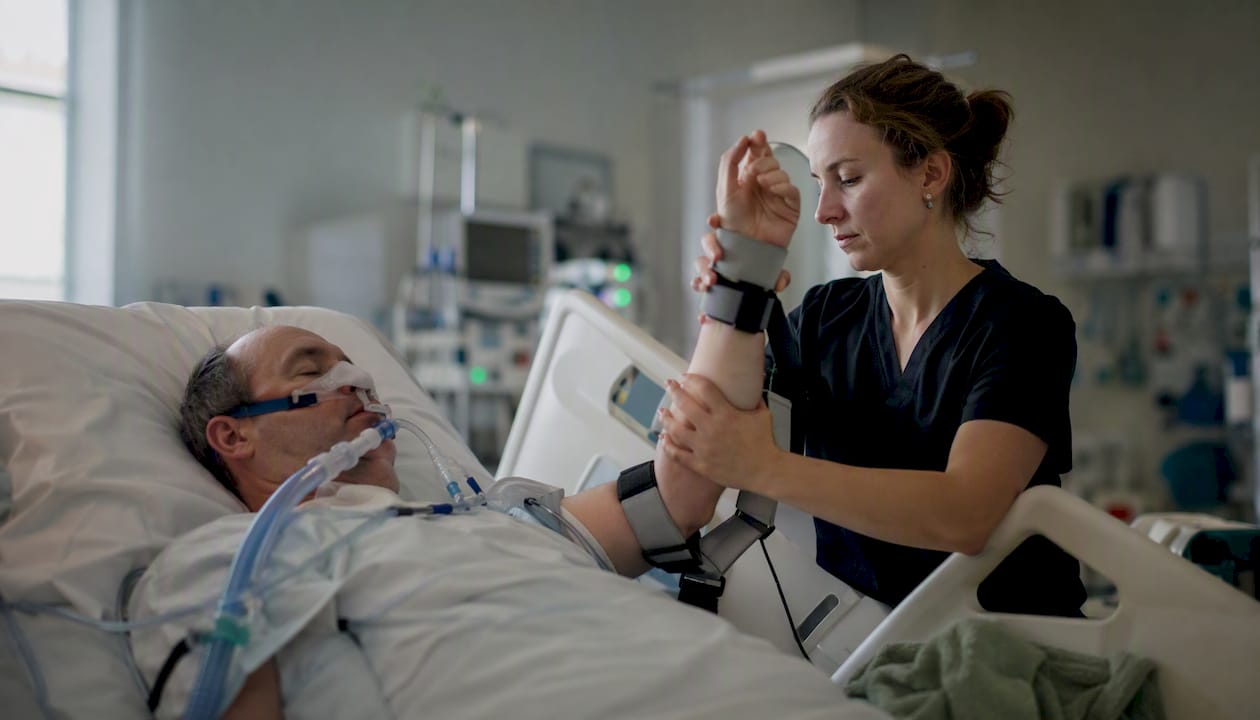
ICU-acquired weakness is a well-documented complication of prolonged bed rest and critical illness. Early mobilization, even passive range-of-motion work in sedated patients, limits muscle loss and sets the foundation for faster recovery once patients are transferred to a ward or discharged home. The transition from acute care to outpatient rehab is where continuity matters most: a warm handoff between your hospital team and your outpatient provider prevents the gaps that lead to setbacks.
When should you start rehabilitation, and what are the red flags?
Start as soon as your surgeon or treating clinician says it is safe. For most orthopedic surgeries, that means the day of or the day after the procedure. For medical admissions, it often means within 48 hours.
Red flags that require prompt medical evaluation before continuing rehab:
- New or worsening numbness, tingling, or weakness in a limb
- Sudden increase in pain that is not explained by exercise
- Fever combined with redness, warmth, or discharge at a wound site
- Loss of bowel or bladder control
- Chest pain, shortness of breath, or palpitations during exercise
Questions to ask at your first rehab appointment:
- What are my specific functional goals for the next 4 weeks?
- How will we measure progress?
- What should I do at home between sessions?
- When is it safe to return to work or driving?
If you need an expedited referral, contact your primary care physician or surgeon directly and request a written order for physical or occupational therapy. Most outpatient clinics can schedule an initial evaluation within a few days of receiving a referral.
Sparkmed offers affordable post-injury rehabilitation in North Miami
Recovering from a car accident, work injury, or surgery in North Miami? Sparkmed delivers affordable, transparent-priced rehabilitation care without the wait times or paperwork barriers of larger systems. Chiropractic adjustments start at $25 with no insurance required, and the clinic offers therapeutic modalities including ultrasound and shockwave therapy, spinal adjustments, and wellness plans built around your recovery goals. Multilingual support in English, Spanish, and Creole means nothing gets lost in translation, and Uber Health transport removes one more obstacle to showing up consistently.
Sparkmed's team works with post-accident and post-surgical patients at every stage of the recovery pathway described in this article, from inflammation control through return-to-activity. Book your initial evaluation or call the clinic directly to request a same-week appointment.
Spark's perspective on rehabilitation and recovery
Rehabilitation is the part of medicine that most patients underestimate until they need it. The evidence from WHO, ICU trials, and sports medicine all points in the same direction: early access and consistent follow-through change outcomes more than any single treatment modality. At Sparkmed, the $25 adjustment offer exists because financial barriers are one of the most common reasons patients delay care, and delayed care is where short-term injuries become chronic problems. Transparent pricing, multilingual staff, and Uber Health transport are not marketing features; they are the practical answer to the access barriers the research identifies. If you are in North Miami and you are waiting to see whether the pain resolves on its own, the data says start sooner.
Sources
- Rehabilitation: key for health in the 21st century – WHO
- Standard of care for rehabilitation in critical illness | Intensive Care Medicine
- Rehabilitation of the Athlete - PMC
- Overview of Rehabilitation - NCBI Bookshelf
- Rehabilitation – MedlinePlus
This article is general information, not a substitute for advice from a qualified doctor. Consult a qualified healthcare professional about your own circumstances before acting on anything here.