
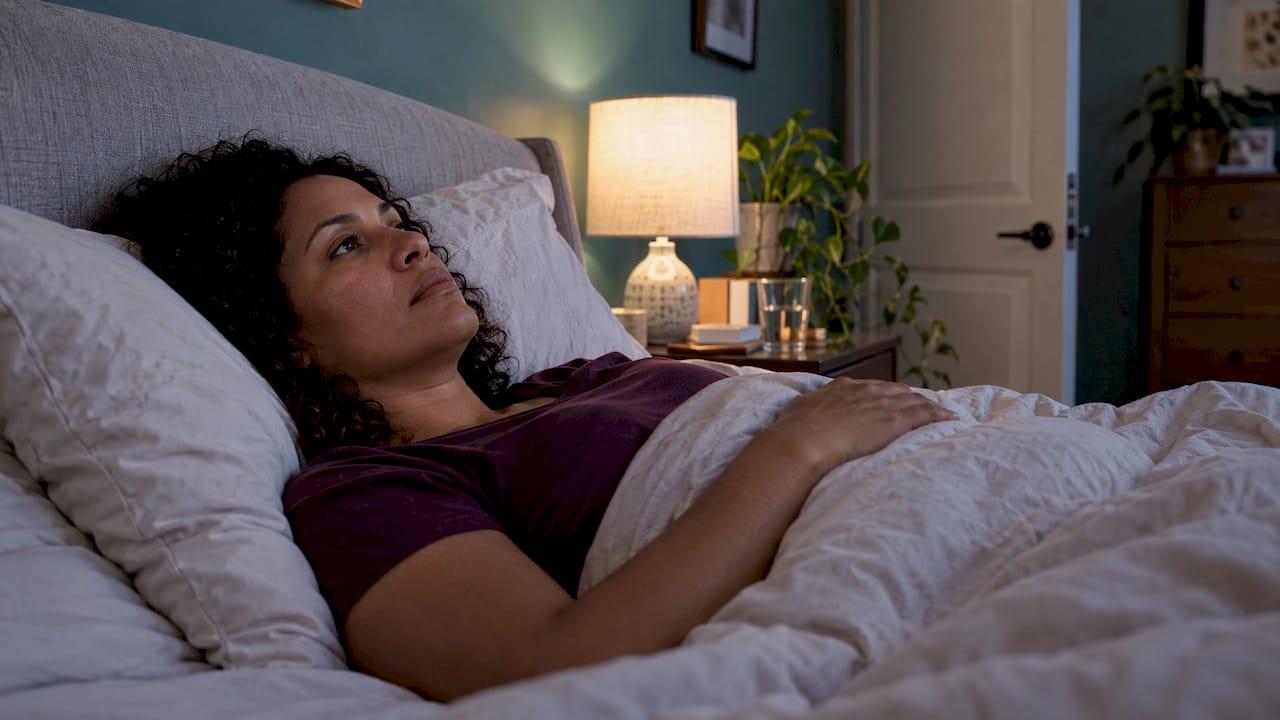
Sleep usually goes wrong after a crash for two reasons that feed each other: an injured neck, back or shoulder that will not let you settle, and a nervous system that stays on alert. Both can be treated, and the sooner the injury is examined, the sooner the pain side of the loop can ease. At Spark Chiropractic in North Miami, we start accident patients with an auto accident evaluation so the pain that keeps you up is identified and documented, not guessed at.
This guide explains what is happening to your sleep, what a normal pattern looks like in the first weeks, which changes need a medical visit, and what you can do tonight.
TL;DR
- Trouble sleeping after a crash is common. It comes from pain, stress or a head injury, often from a mix of all three.
- Sleeping more than usual in the first days is typical after a concussion. If it lasts beyond two to four weeks, it needs a medical look.
- A fixed schedule, a dark cool room, no late caffeine or alcohol and no screens in bed are the first steps. Pain that keeps waking you needs to be examined.
- Go to the emergency room for loss of consciousness, vision changes, limb weakness, bruising behind the ears or prolonged forgetfulness.
- We examine and document accident injuries in North Miami, with bilingual staff (English, Spanish, Creole) and direct insurance billing.
Table of Contents
- Why a crash disrupts sleep
- What a normal timeline looks like
- Is it safe to sleep after a possible concussion?
- What helps you sleep: a plan for the first weeks
- Sitting and movement while you recover
- When pain is what keeps you awake
- How we approach it at Spark
- Getting started in North Miami
- FAQ
- Sources
Why a crash disrupts sleep
Most people expect to feel sore after a collision. Fewer expect the nights to fall apart. Three mechanisms usually sit behind it.
Pain that finds you in every position
Whiplash, a strained lower back or a sore shoulder can make every position uncomfortable. You wake each time you roll onto the injured side, then lie there tense. Poor sleep, in turn, lowers your tolerance for pain the next day, so the loop tightens. This is the part of the problem a hands-on examination can address directly.
A nervous system that will not stand down
A 2019 exploratory study of 71 people who came to an emergency department after a motor vehicle accident found that intrusive memories in the first week were linked, moderately at best, to trouble falling asleep (r=.34) and staying asleep (r=.37). The authors suggested that a hyperaroused central nervous system may be what keeps sleep away. In plain terms: your body is still reacting as if the danger is not over.
Nightmares matter too. In a prospective study of 314 accident victims, nightmares at three months, along with PTSD symptoms at six weeks, were associated with sleep onset and maintenance problems three months after the crash, and the three-month nightmares predicted trouble staying asleep a year out. The takeaway is practical: frequent nightmares are worth raising with your doctor early, not waiting out.
A head injury you may not know you have
You do not need to hit your head on anything to have a concussion. The force of a collision can be enough. A peer-reviewed review reports that sleep disturbances affect 30% to 70% of people after traumatic brain injury, often after a mild one, with insomnia, fatigue and daytime sleepiness the most common complaints. The same review notes that depression, anxiety and pain strongly influence sleep quality, which is why one cause rarely acts alone.

What a normal timeline looks like
Sleep changes after a head injury tend to follow a pattern. A practical clinical guide describes heavy sleepiness and daytime naps in the first week, then trouble falling asleep or early morning waking two to three weeks after the injury, which can leave you tired in the daytime and may reflect a shift in the body clock.
That gives you a rough map:
| Period | What many people notice | What to do |
|---|---|---|
| First days | Heavy sleepiness, long naps, or the opposite: wired and unable to settle | Rest, keep naps short, get your injuries examined |
| Weeks 2 to 3 | Trouble falling asleep, early waking, daytime fatigue | Fix your schedule and bedroom, keep a sleep log |
| Beyond 2 to 4 weeks | Persistent heavy sleepiness | Get a medical evaluation for other causes |
| Beyond 3 months | Insomnia at least 3 nights a week | Treat as chronic insomnia with a clinician |
The last two rows come from the Defense Health Agency's TBICoE guidance, which says excessive daytime sleepiness persisting beyond two to four weeks after a mild TBI warrants a search for other causes. It defines short-term insomnia as lasting under three months and chronic insomnia as symptoms at least three times a week for at least three months.
Is it safe to sleep after a possible concussion?
Yes. The old rule that you must stay awake or be woken every hour is a myth. Cleveland Clinic's guidance says there is no evidence that someone with a concussion should avoid sleep or be woken for check-ins, and that a full night's sleep is more beneficial than being roused hourly.
What matters is knowing the signs that mean you should not wait. Cleveland Clinic lists these as needing emergency attention after a head injury:
- Losing consciousness
- Vision changes
- Weakness in the arms or legs
- Bruising behind the ears
- Prolonged forgetfulness
It also advises seeking care if concussion symptoms do not resolve within two to three weeks or get worse with activity. If any of the first five appear, go to the emergency room or call 911 rather than going to bed.
The TBICoE guidance adds red flags that need prompt referral: sleepwalking or acting out dreams in a way that could cause injury, being unable to stay awake or feeling sleepy while driving or operating machinery, and any psychological symptoms involving danger to yourself or others. If you are having thoughts of harming yourself, call or text 988, the Suicide & Crisis Lifeline, or go to the nearest emergency room. If you are drowsy behind the wheel, do not drive.
Our own guides on concussion versus whiplash symptoms and headaches after a car accident help you sort out which symptoms overlap and which signal the ER.
What helps you sleep: a plan for the first weeks
The strongest evidence supports the basics done consistently. TBICoE's guidance, drawing on the American Academy of Sleep Medicine and the Sleep Research Society, recommends:
- At least 7 hours of sleep on a regular basis
- No caffeine, nicotine or energy drinks in the 6 hours before bed
- No alcohol within 2 hours of bed
- No light-emitting devices within 2 hours of bed
- Using the bedroom only for sleep and intimacy
- Natural light in the morning
- Naps of 30 minutes or less, finished at least 7 hours before bedtime
A 2019 overview adds that fixed schedules and getting out of bed if you have not fallen asleep within about 30 minutes are the first things to address, and that cognitive behavioral therapy for insomnia (a structured, talk-based program run by a trained clinician) is considered the first-line approach after brain injury, with regular aerobic exercise also shown to improve sleep. Ask your doctor before using any sleep aid, a point Cleveland Clinic makes as well.
Set up the bedroom for an injured body
Cleveland Clinic suggests keeping your head and neck aligned with your spine, and keeping the room dark, quiet and cool, with sleep specialists citing 60 to 67°F as the optimal range. In a Miami summer that means running the air conditioning at night and using blackout curtains.
For an aching neck or back, a few adjustments reduce the number of times you wake:
- Back sleeping: a pillow that fills the gap under your neck without pushing your chin toward your chest, and a pillow under your knees.
- Side sleeping: a pillow thick enough to keep your head level with your spine, and a pillow between your knees.
- Avoid stomach sleeping while your neck is sore, since it holds your head turned for hours.
If you like a wind-down routine, a dim red light before bed is one way people keep the evening light low without sitting in the dark.
Write down your nights
For two weeks, note when you went to bed, how long it took to fall asleep, how many times you woke and why (pain, a nightmare, noise), and how sleepy you felt the next day. It takes two minutes. It also gives a clinician something concrete to work from and shows whether pain or stress is the bigger driver.
Sitting and movement while you recover
Many people searching for sleep help also ask about sitting, because long stretches in a chair or car seat can stiffen a sore neck and back and make the night worse. We cannot point you to a single official figure for how long is too long, so the guidance here is general and the rule is simple: change position often and let comfort set the limit.
- Stand up and move around regularly during long drives, work hours and TV time.
- Sit with your back supported and your head over your shoulders, not craned toward a screen. Our page on text neck after an accident covers the posture side.
- Keep walking gently as your pain allows. Aerobic activity is linked to better sleep in the research above, and light movement helps stiffness.
- If sitting triggers pain that shoots into an arm or leg, numbness, or weakness, get examined before pushing through it.
When pain is what keeps you awake
If you wake because of neck, back or shoulder pain, sleep hygiene alone will not solve it. The pain needs its own diagnosis. Common injuries after a collision, including whiplash, sprains and disc irritation, are covered in our guide to common auto injuries, and delayed symptoms are listed in 15 signs to watch for after a car accident.
Headaches that wake you or dizziness that makes lying down uncomfortable can also be tied to the neck. We cover those in our pages on cervicogenic headache after an accident and dizziness after a car accident. For a closer look at how sleep and injury connect, see our guide to sleep problems after a car accident.
If you are not sure how soon to be seen, how soon to see a chiropractor after an accident walks through the timing. And if you have lost consciousness, have vision changes, or feel confused, the emergency room comes first.
How we approach it at Spark
We have more than 20 years of experience treating accident victims, and the same story comes up often: the person says the crash was minor, then says they cannot sleep. We treat that as a signal that something in the neck, back or shoulders needs a proper look.
Our approach starts with an auto accident evaluation, and our care for accident injuries includes spinal adjustments, ultrasound, shockwave therapy, electrical stimulation, traction and decompression, massage therapy, and heat and cold therapy. Easing the pain that wakes you gives the habits above a fair chance to work.
We also know that recovery is easier when the barriers are lower. Our team speaks English, Spanish and Creole, we offer free transportation services, and we bill insurance directly while documenting your injuries thoroughly for your claim. That documentation matters because sleep loss and pain are part of what you are living with after a crash.
Sleep problems that point to something beyond the musculoskeletal system, such as the red flags above, belong with a medical doctor or the ER, and we will tell you so. For the pain, stiffness and movement side, we are here.
Spark
Getting started in North Miami
If pain is breaking up your nights, the next step is an examination. Our chiropractic adjustments are $45 per session, and shockwave therapy is $75 per session. Monthly wellness plans are listed on our pricing page: Essential at $149 a month, Performance at $249 and Elite at $399. Massage, ultrasound, electrical stimulation, traction and decompression, and the auto accident evaluation are on our services page.

If you are wondering what the first visit involves, read what to expect from spinal adjustments after a car accident, or see how many chiropractic visits accident patients typically need. You can book through our main page.
FAQ
How long do sleep problems last after a car accident?
For many people they ease within weeks as pain and stress settle. Clinical guidance treats insomnia lasting under three months as short-term, and chronic insomnia as symptoms at least three nights a week for at least three months. If sleep is still disrupted after a few weeks, or sleepiness lasts beyond two to four weeks after a possible concussion, see a doctor.
Why am I sleeping so much after my accident?
Heavy sleepiness is common in the first days after a concussion and usually improves. Keep naps to 30 minutes or less and stay in daylight in the morning. If it persists beyond two to four weeks, or you cannot stay awake while driving, get evaluated medically.
Should I stay awake after hitting my head in a crash?
No. There is no evidence that you must avoid sleep or be woken hourly after a concussion. Go to the emergency room first if you lost consciousness, have vision changes, limb weakness, bruising behind the ears or prolonged forgetfulness.
Can insomnia after an accident be part of my injury documentation?
Sleep loss is a real symptom, and it helps to track it. Keep a nightly log and tell your provider about it at every visit. We document injuries thoroughly for insurance claims, and for questions about legal coverage, speak with a licensed attorney.
Is it okay to sit for long periods after a car accident?
Long unbroken sitting can stiffen a sore neck and back. Change position often, keep your back supported and walk as pain allows. If sitting causes numbness, weakness or pain that travels down an arm or leg, get examined.
Sources
- Effects of early nightmares on the development of sleep disturbances after motor vehicle accidents (PubMed, 2009)
- Traumatic brain injury-induced sleep disorders (PMC, 2016)
- Sleep disturbance and intrusive memories after presenting to the emergency department following a traumatic event (PMC, 2019)
- A practical guide to evaluating sleep disturbance in concussion patients (PMC)
- Assessment and Management of Sleep Disturbances Following Concussion/mTBI (TBICoE, September 2024)
- Impact of traumatic brain injury on sleep: an overview (PMC, 2019)
- Is It Safe To Sleep With a Concussion? (Cleveland Clinic)
- Dim Red Light for Sleep