
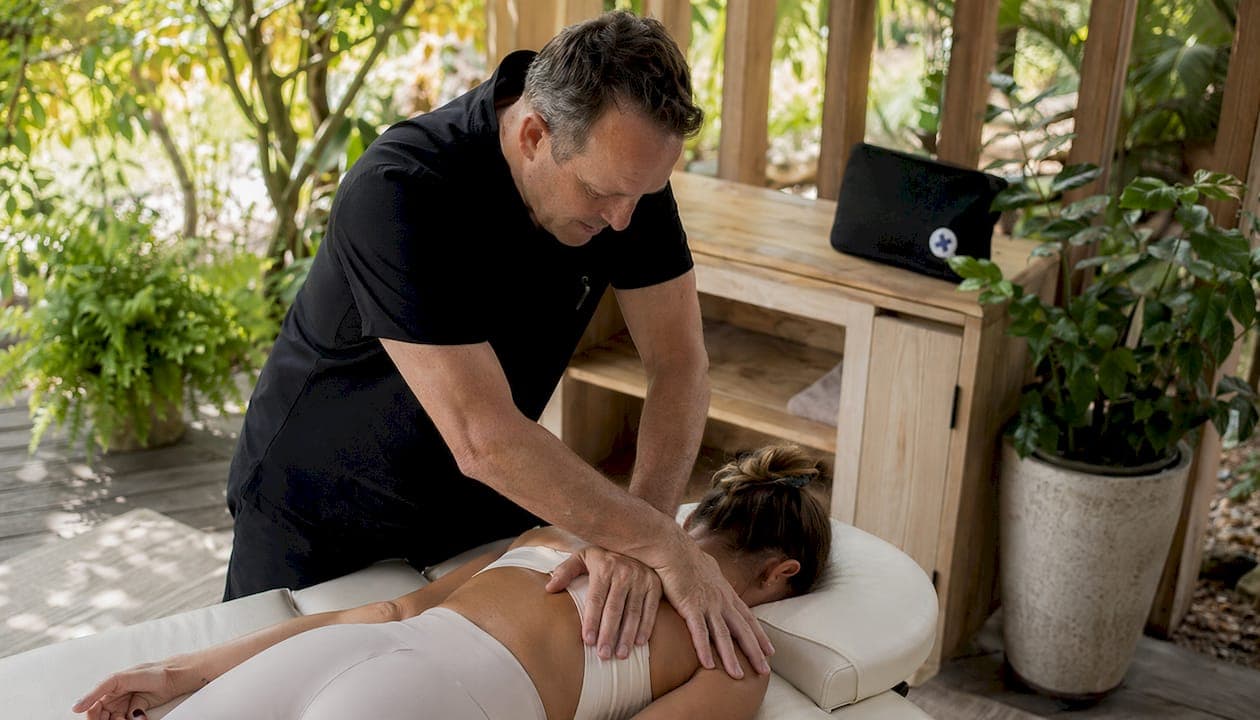
Spinal adjustment is defined as a precise manual technique that restores joint mobility, reduces nerve interference, and triggers the body's own repair processes. Clinically, this is the standard term for what many patients call a "chiropractic adjustment," and understanding the role of adjustment in healing changes how you approach your entire recovery. Whether you are dealing with whiplash from a car accident, chronic low back pain, or a soft tissue injury, the adjustment does not simply relieve pain. It resets the nervous system and creates the biological conditions your body needs to repair itself. What happens after you leave the table matters just as much as what happens on it.
How do spinal adjustments restore structural and neurological function?
Spinal adjustments remove structural dysfunction that blocks proper nerve flow. When a joint is restricted or misaligned, the surrounding nerves cannot transmit signals efficiently. That disruption slows down the cellular repair processes your body runs automatically. Restoring joint motion through adjustment corrects that signal pathway and gives your tissues the neurological input they need to heal.
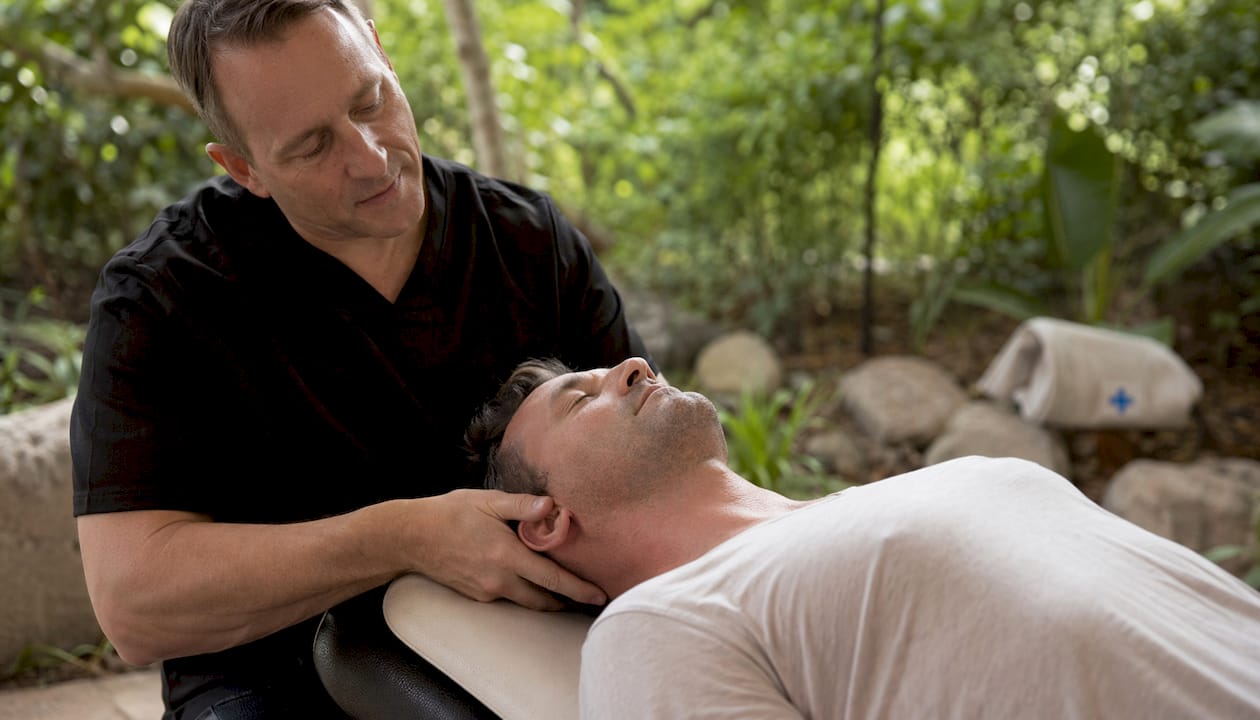
The nervous system response to an adjustment follows a specific pattern. The initial manipulation triggers a brief sympathetic spike, the same "alert" state your body enters under stress. That spike is followed by a sustained parasympathetic response, the "rest and digest" state where tissue repair actually occurs. This sympathetic-to-parasympathetic shift is why many patients feel deeply relaxed after a session, and it is the biological window during which cellular healing accelerates.
Muscle spasms are a secondary problem that adjustments address directly. Chronic spasms restrict blood flow and limit oxygen delivery to injured tissue. When an adjustment releases joint restriction, the surrounding muscles often relax as well. That relaxation improves circulation, which carries the nutrients and immune cells that repair damaged fibers. Integrated care combining soft tissue work with spinal adjustments outperforms adjustments alone for this reason.
Here is what the adjustment accomplishes at a structural and neurological level:
- Joint mobility restoration: Frees restricted segments so the spine moves through its full range without compensation.
- Nerve decompression: Reduces mechanical pressure on spinal nerves, improving signal quality to muscles and organs.
- Muscle spasm reduction: Releases reflex tension in paraspinal muscles, improving local blood and oxygen supply.
- Parasympathetic activation: Shifts the nervous system into repair mode, supporting cellular tissue healing.
- Proprioceptive reset: Recalibrates the brain's map of joint position, reducing guarding and abnormal movement patterns.
Pro Tip: Ask your chiropractor to explain which specific joints they are targeting and why. Patients who understand the mechanism of their treatment report better compliance and faster outcomes.
Why does patient lifestyle matter after an adjustment?
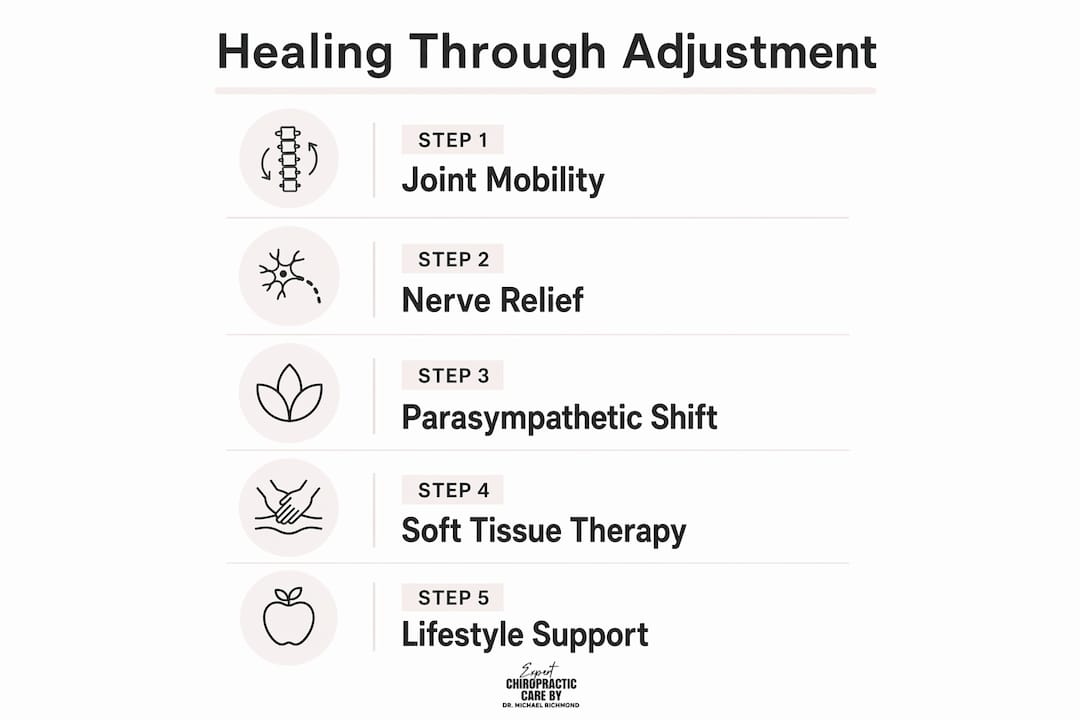
The adjustment creates a controlled stress on the body. Like any productive stress, it requires recovery support to deliver results. Healing after an adjustment is not passive. What you do in the 24–48 hours following a session shapes how much benefit you retain.
Active recovery after an adjustment follows a clear sequence:
- Hydrate immediately. Spinal discs and joint cartilage are largely water. Rehydrating after an adjustment helps maintain the tissue pliability that the manipulation just restored.
- Eat anti-inflammatory foods. Omega-3 fatty acids from fish, walnuts, and flaxseed reduce the low-grade inflammation that slows tissue repair. Managing inflammation naturally through diet is one of the most underused recovery tools.
- Move gently. Light walking or prescribed stretches keep the adjusted joints from stiffening. Prolonged sitting after an adjustment can reverse some of the mobility gains within hours.
- Avoid high-impact activity. Heavy lifting or intense exercise in the first 24 hours can re-trigger muscle guarding before the nervous system has consolidated the new movement pattern.
- Sleep on a supportive surface. The parasympathetic repair window extends through sleep. A mattress that maintains spinal alignment lets that repair process continue uninterrupted.
Post-adjustment soreness is normal and signals adaptation, not injury. It indicates that tissues are responding to the new mechanical input. Omega-3 supplementation and balanced light activity help manage that soreness while keeping the healing process moving forward.
Patients who neglect recovery habits after adjustments hit plateaus faster. Symptoms return sooner, and the number of visits required to achieve lasting relief increases. The importance of adjustment in recovery is real, but the adjustment is only the catalyst. Your daily choices determine the outcome.
Pro Tip: Keep a simple recovery log after each session. Note your soreness level, hydration, sleep quality, and activity. Patterns in that log help your chiropractor refine your treatment plan faster.
What adjustment techniques are used for personalized healing?
Chiropractic care is not one technique applied uniformly. Personalized treatment plans match the adjustment method to the patient's condition, pain tolerance, age, and tissue sensitivity. That matching process is what separates effective care from generic treatment.
The two broad categories of adjustment techniques are high-velocity low-amplitude (HVLA) manipulation and low-force methods. HVLA is the traditional manual adjustment that produces the familiar audible release. Low-force techniques use either sustained gentle pressure or instrument-assisted tools to achieve joint mobilization without the rotational force of HVLA.
| Technique type | Best suited for | Key benefit |
|---|---|---|
| HVLA manual adjustment | Patients with good tissue tolerance and acute joint restriction | Fast joint mobilization and proprioceptive reset |
| Low-force manual mobilization | Patients with osteoporosis, acute inflammation, or post-surgical care | Gentle progressive motion restoration |
| Instrument-assisted adjustment | Patients fearful of manual manipulation or with extreme sensitivity | Controlled, repeatable force without rotation |
| Flexion-distraction | Disc herniations and lumbar stenosis | Decompresses disc material without direct thrust |
Gentle chiropractic techniques shift the nervous system from fight-or-flight to rest-and-digest mode with less post-treatment soreness. That makes them particularly effective for patients recovering from car accident trauma, where the nervous system is already in a heightened state of alert.
Personalized plans also integrate complementary therapies alongside the adjustment itself:
- Myofascial release: Addresses trigger points in muscle tissue that would otherwise pull the spine back out of alignment.
- Ultrasound therapy: Uses sound waves to reduce deep tissue inflammation and accelerate cellular repair.
- Rehabilitative exercises: Prescribed movements that reinforce the structural corrections made during the adjustment.
- Postural coaching: Identifies daily habits, such as screen position or sleeping posture, that undermine treatment gains.
Treating the whole body rather than an isolated symptom produces more durable results. A patient with neck pain from whiplash, for example, often has compensatory tension in the thoracic spine and shoulders. Addressing only the cervical spine leaves the compensation pattern intact, and symptoms return.
How do integrated therapies amplify the healing effect of adjustments?
Soft tissue therapy and rehabilitative exercises multiply the benefit of spinal adjustments. An adjustment corrects joint position and nerve flow, but if the surrounding muscle environment remains in spasm, the realignment does not hold. Unresolved muscle spasms negate spinal realignment by impairing circulation and nerve function at the tissue level.
Myofascial release and massage applied before or after an adjustment prepare the soft tissue environment. Circulation improves, muscle guarding decreases, and the joint responds more fully to the manipulation. Therapeutic exercises then reinforce the corrected movement pattern by building the muscular strength and coordination needed to maintain proper alignment between visits.
Lifestyle guidance rounds out the integrated approach. Sleep quality, stress levels, and dietary choices all influence the speed of tissue repair. Consistent multi-visit care focused on correcting underlying biomechanical dysfunction, rather than just masking symptoms, produces durable healing outcomes. Patients who combine adjustments with soft tissue work, prescribed exercise, and lifestyle support recover faster and maintain those gains longer than patients who rely on adjustments alone.
Key Takeaways
Spinal adjustment initiates healing by restoring joint mobility and triggering a parasympathetic repair response, but lasting recovery requires active patient participation and an integrated treatment plan.
| Point | Details |
|---|---|
| Adjustment triggers repair | The sympathetic-to-parasympathetic shift after adjustment opens the biological window for tissue healing. |
| Lifestyle determines outcomes | Hydration, anti-inflammatory nutrition, and gentle movement after each session preserve and extend adjustment benefits. |
| Technique must match the patient | HVLA, low-force, and instrument-assisted methods each suit different conditions and sensitivities. |
| Integrated care outperforms adjustments alone | Soft tissue therapy and rehabilitative exercises prevent muscle spasm from reversing spinal corrections. |
| Consistency beats single sessions | Lasting recovery requires adherence to individualized, multi-visit plans targeting the underlying dysfunction. |
What I have learned about adjustments after years of working with recovery patients
Most patients arrive expecting the adjustment to do all the work. That expectation is understandable. The relief after a good adjustment can feel immediate and significant. But that relief is the opening of a window, not the completion of a process.
What I have seen consistently is that patients who engage actively between visits recover faster and stay better longer. The ones who hydrate, follow their movement protocols, and show up consistently for their full plan get results that hold. The ones who come in for a single session when pain spikes, then disappear until the next flare, cycle through the same injury patterns for years.
The other misconception worth addressing directly: soreness after an adjustment is not a sign that something went wrong. It signals that your body is adapting to a new structural reality. That adaptation is the point. Treating it with rest, omega-3s, and light activity moves you forward. Treating it with fear and inactivity stalls the process.
Individualized chiropractic care works because it accounts for the full picture: your injury history, your tissue sensitivity, your daily habits, and your recovery capacity. A plan built around those factors produces results that generic, symptom-chasing care cannot match. The adjustment is the spark. Everything else is the fuel.
— Spark
Sparkmed's approach to personalized chiropractic recovery
Sparkmed specializes in chiropractic care for patients recovering from injuries, including car accident trauma, in North Miami. The clinic builds individualized treatment plans that combine spinal adjustments with soft tissue therapy, rehabilitative guidance, and lifestyle support.
Sparkmed offers a $25 chiropractic adjustment that does not require insurance, making it accessible for patients who need to start care quickly without financial barriers. The clinic's practitioners select adjustment techniques based on each patient's condition and sensitivity, including gentle and instrument-assisted options for those who need a lower-force approach. For patients ready to take the next step, Sparkmed's patient-focused care resources outline how the clinic supports every stage of recovery, from the first adjustment through long-term wellness.
FAQ
What is the role of adjustment in healing?
Spinal adjustment restores joint mobility, reduces nerve interference, and triggers a parasympathetic nervous system response that accelerates tissue repair. It acts as a neurological catalyst that creates the biological conditions for natural healing.
How many adjustments does it take to feel better?
Immediate relief can occur after a single session, but lasting recovery requires consistent multi-visit care focused on correcting the underlying biomechanical dysfunction rather than just managing symptoms.
Is soreness after an adjustment normal?
Yes. Post-adjustment soreness signals that your body is adapting to restored joint position and improved nerve function. Managing it with omega-3 supplementation and light activity supports the healing process rather than interrupting it.
What adjustment techniques work best for sensitive patients?
Low-force manual mobilization and instrument-assisted adjustment methods suit patients with high sensitivity, acute inflammation, or fear of traditional manipulation. Gentle techniques shift the nervous system toward rest-and-digest mode with less post-treatment soreness.
What should I do between chiropractic appointments?
Hydrate consistently, eat anti-inflammatory foods, perform any prescribed stretches or exercises, and avoid high-impact activity for 24 hours after each session. Active recovery between visits determines how much benefit each adjustment delivers.