

Nerve interference is a disruption in a nerve's ability to send or receive signals correctly, usually because something is compressing, irritating, or damaging it. The result can be pain, numbness, tingling, or weakness, depending on which nerve is affected and how badly.
If your symptoms are mild, two things help most: short-term rest paired with ice or heat for several minutes several times daily, and an over-the-counter anti-inflammatory if your doctor says it's safe for you, alongside gentle movement rather than total inactivity. If you notice sudden weakness, new trouble walking, or loss of bladder or bowel control, stop reading and get emergency care. That combination points to something more urgent than a routine pinched nerve.
For deeper context, the National Institute of Neurological Disorders and Stroke, the Mayo Clinic, and clinics like Sparkmed all describe the same underlying mechanism, just with different vocabulary. Chiropractors often say "nerve interference." Neurologists say "peripheral neuropathy" or "radiculopathy." They're pointing at the same wiring problem.
- Mild symptoms: rest the area briefly, apply ice or heat, try an OTC NSAID if appropriate, and keep moving gently.
- Persistent symptoms: if pain, numbness, or tingling lasts more than a couple of weeks, schedule an evaluation.
- Urgent symptoms: sudden weakness, loss of bladder or bowel control, or rapidly worsening numbness need same-day medical attention.
Key Takeaways
Nerve interference means a nerve's signal is being disrupted by compression, irritation, or damage, and most mechanical cases improve substantially with early, conservative care.
| Point | Details |
|---|---|
| Core definition | Nerve interference is disrupted nerve signaling from compression, irritation, or injury, not a single disease. |
| Most common causes | Mechanical issues like disc herniation and posture strain, plus systemic conditions like diabetes, account for most cases. |
| Watch for symptom type | Sensory tingling, motor weakness, and autonomic changes each point to a different severity level. |
| Red flags need urgency | Sudden weakness or loss of bladder/bowel control requires same-day medical care, not a wait-and-see approach. |
| Best next step | Try conservative self-care for mild symptoms; seek evaluation if symptoms persist beyond a couple of weeks. |
Table of Contents
- What Causes Nerve Interference?
- How Do Symptoms Differ by Nerve Type?
- How Clinicians Diagnose Nerve-Related Problems
- What Are the Treatment Options for Nerve Interference?
- How Do Chiropractors Approach Nerve Interference?
- When Should You See a Doctor for Nerve Symptoms?
- Preventing Nerve Interference and Supporting Recovery
- How Long Does Recovery from Nerve Interference Take?
- A Clinic's Perspective on Suspected Nerve Interference
- Where to Learn More About Nerve Health
- Sources
What Causes Nerve Interference?
Most cases trace back to one of two broad categories: mechanical pressure on a nerve, or a systemic condition damaging nerve tissue from the inside. Knowing which bucket your symptoms fall into changes everything about how you treat them.
Mechanical causes are the ones most people picture when they think of a "pinched nerve." A herniated disc pressing on a nerve root, a bone spur narrowing the space a nerve travels through, or a joint that isn't moving properly in the spine can all pinch or irritate the surrounding nerve tissue. So can slouching at a desk for eight hours a day, a sudden car accident, or years of repetitive motion at a job that stresses the same joint over and over. A pinched nerve occurs when tissue or bone presses against a nerve, most often in the neck or lower back, and left untreated it can lead to chronic pain and muscle wasting.
Systemic causes work differently. Instead of one localized pressure point, they damage nerve fibers more broadly. Diabetes is the most common driver of peripheral neuropathy overall, and it tends to show up first as tingling or numbness in the feet, according to the Cleveland Clinic. Autoimmune diseases, infections, poor blood flow, hormonal shifts, and even tumors can also injure nerves, and the Mayo Clinic notes that many of these conditions affect more than one type of nerve fiber at once, which is part of why early evaluation matters.
- Herniated or bulging disc pressing on a nerve root
- Bone spurs narrowing the spinal canal or foraminal space
- Joint dysfunction or misalignment in the spine
- Poor posture sustained over long periods
- Traumatic injury, including whiplash from car accidents
- Repetitive stress from manual labor or repetitive motion jobs
- Diabetes-related neuropathy
- Autoimmune diseases like lupus or rheumatoid arthritis
- Infections and, less commonly, tumors compressing nerve pathways
- Poor circulation (ischemia) starving nerve tissue of oxygen
Pro Tip: If you have diabetes, work a physically repetitive job, or have a history of spinal trauma, treat new tingling or numbness as worth checking sooner rather than later. These risk factors stack, and catching nerve irritation early almost always means an easier recovery.
How Do Symptoms Differ by Nerve Type?
Nerves don't all do the same job, so damage to one type produces a completely different symptom than damage to another. Peripheral nerves function something like electrical wiring: they carry outgoing motor commands and incoming sensory information, and when the insulation or the wire itself gets damaged, the message either doesn't arrive, arrives distorted, or triggers the wrong response entirely, according to MedlinePlus.

Sensory nerve involvement usually feels like tingling, numbness, burning, or a "pins and needles" sensation. Motor nerve involvement shows up as weakness, cramping, or muscle twitching, and if it's severe enough, visible muscle loss over time. Autonomic nerve involvement is the one people underestimate. It can quietly disrupt digestion, heart rate, blood pressure regulation, or sweating, and the National Institute of Neurological Disorders and Stroke flags autonomic symptoms as clinically more serious than pain alone, precisely because they touch vital functions rather than just comfort.
| Nerve Type | Example Symptoms | Everyday Example |
|---|---|---|
| Sensory | Tingling, numbness, burning | Pins and needles in the feet after sitting cross-legged too long |
| Motor | Weakness, cramping, muscle twitching | Foot drop making it hard to lift the front of your foot while walking |
| Autonomic | Digestive changes, abnormal sweating, heart rate shifts | Feeling unusually full after small meals or noticing irregular sweating |
Some symptom patterns are common enough to have their own names. Sciatica typically causes shooting pain down the back of one leg, often with numbness in the calf or foot. Cervical radiculopathy shows up as neck pain radiating into the shoulder or arm, sometimes with hand weakness. Carpal tunnel syndrome causes numbness and tingling in the thumb, index, and middle fingers, usually worse at night. Isolated nerve dysfunction, sometimes called mononeuropathy, tends to follow a single nerve's path and produces symptoms confined to that specific distribution, according to Healthline.
- Sciatica: shooting leg pain, often one-sided, worse with sitting
- Cervical radiculopathy: neck pain radiating into the arm or hand
- Carpal tunnel syndrome: nighttime numbness in the thumb and first two fingers
How Clinicians Diagnose Nerve-Related Problems
Diagnosis almost always starts with a conversation, not a scan. A clinician wants to know when the symptoms began, what makes them better or worse, whether certain positions trigger pain, and whether the pattern matches a specific nerve's territory. That history, combined with a physical exam checking reflexes, strength, and sensation, gives most clinicians a strong hunch before any imaging happens.
If the picture is still unclear, or if symptoms are severe or persistent, testing comes next. The Mayo Clinic outlines the standard toolkit:
- X-ray: useful for spotting bone spurs, alignment issues, or structural changes in the spine.
- MRI: shows soft tissue detail, including disc herniations and nerve root compression.
- Nerve conduction studies (NCS): measure how fast electrical signals travel through a nerve, which helps pinpoint where the signal is slowing or stopping.
- Electromyography (EMG): measures electrical activity in muscles to determine whether nerve damage has affected muscle function.
The typical pathway follows a predictable order:
- Focused history and physical exam to identify the likely pattern and affected nerve.
- A trial of conservative care, since many nerve issues improve without any imaging at all.
- Escalation to imaging or electrodiagnostic testing (NCS/EMG) if symptoms persist, worsen, or present with red flags.
What Are the Treatment Options for Nerve Interference?
Treatment generally moves from the least invasive option to the most invasive, and most people never need to go past the first two steps. The Mayo Clinic notes that treatment for a pinched or compressed nerve typically begins with rest and physical therapy, escalating to injections or surgery only when conservative care fails.
| Treatment Level | What It Involves | Typical Use Case |
|---|---|---|
| Self-care | Rest, ice/heat, activity modification | Mild, recent-onset symptoms |
| Physical therapy | Supervised stretching and strengthening | Symptoms persisting past a week or two |
| Medications | NSAIDs, neuropathic pain medications | Ongoing pain not resolved by rest alone |
| Injections | Corticosteroid injections near the affected nerve | Persistent inflammation not responding to PT or meds |
| Surgery | Decompression or disc procedures | Severe, progressive, or unresponsive compression |
Most pinched nerves genuinely do improve with conservative home care alone, according to Harvard Health. That's not a hedge, it's the actual outcome for the majority of people. Physical therapy adds targeted strengthening and mobility work that home stretching alone rarely achieves. Medications manage symptoms while the underlying issue resolves rather than fixing the cause. Injections buy time by calming inflammation directly at the source. Surgery is reserved for compressions that don't respond to anything else or that involve significant nerve damage risk.
- Self-care: rest, ice/heat, gentle movement, OTC anti-inflammatories
- Physical therapy: targeted stretching, postural correction, strengthening
- Medications: NSAIDs for inflammation, neuropathic agents for nerve pain
- Injections: corticosteroid injections for stubborn localized inflammation
- Surgery: decompression procedures for severe or unresponsive cases
Non-invasive modalities like ultrasound and shockwave therapy also show up in many recovery plans as a middle step between basic self-care and injections, particularly for soft-tissue involvement. You can read more about how those non-invasive therapy options fit into a broader recovery plan.
Pro Tip: "Failed conservative care" generally means several weeks to a few months of consistent treatment (rest, PT, medication) without meaningful improvement, or symptoms that get worse despite following the plan. If you're at that point, it's a reasonable signal to talk to your clinician about the next step rather than waiting longer.
How Do Chiropractors Approach Nerve Interference?
Chiropractic care frames nerve interference around spinal joint dysfunction, sometimes called subluxation, that irritates a nearby nerve root as it exits the spine. In clinical terms, that description usually overlaps with what a neurologist would call a pinched nerve or radiculopathy. The vocabulary differs, but the target is the same: a nerve whose function is being disrupted by something pressing on or irritating it.
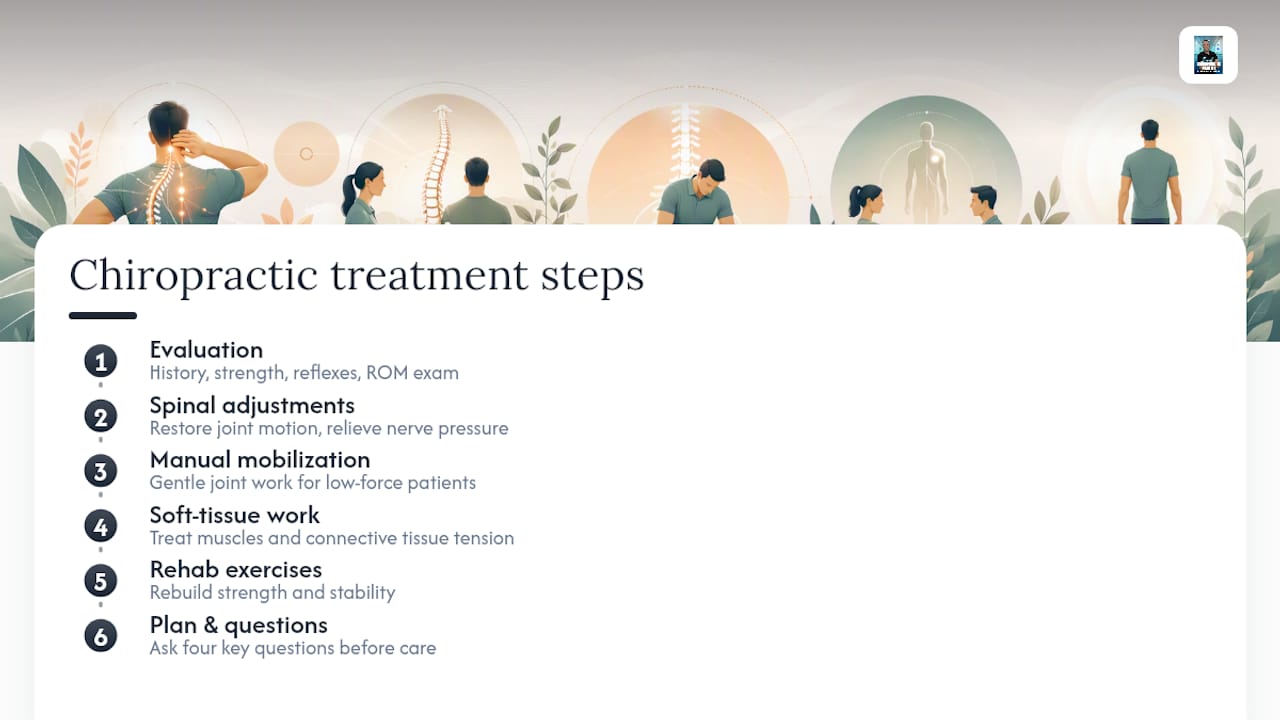
Chiropractors typically address this with a combination of techniques. Spinal adjustments aim to restore normal joint motion and relieve pressure on the affected nerve. Manual mobilization works the surrounding joints more gently for patients who need a lower-force approach. Soft-tissue work addresses the muscles and connective tissue that tighten around an irritated nerve, and rehab exercises help rebuild strength and stability once acute symptoms ease. You can see how this pathway typically unfolds in a step-by-step chiropractic treatment plan, and how spinal alignment connects to nerve signaling in more detail through this explanation of spinal misalignment.
At Sparkmed, that evaluation starts the same way any credible clinical exam should: a history of when symptoms began, what aggravates or eases them, and a physical exam checking strength, reflexes, and range of motion before any treatment plan is built.
Pro Tip: Before starting care with any chiropractor, ask four things: what are your credentials and experience with nerve-related complaints, at what point would you refer me to a specialist, how many visits should I expect before seeing improvement, and how will we measure whether it's working? A good clinician answers all four without hesitation.
When Should You See a Doctor for Nerve Symptoms?
Most nerve irritation is not an emergency, but certain signs mean you should not wait for a scheduled appointment. Recognizing the difference is the single most useful skill in this entire topic.
Sudden or rapidly worsening muscle weakness, new numbness paired with difficulty walking, loss of bladder or bowel control, severe pain that doesn't ease with rest or medication, or fever alongside neurological changes are all signs that need same-day medical evaluation, not a wait-and-see approach.
Outside of those red flags, timing is more flexible but still matters. If symptoms are progressively getting worse over days, book a visit with a primary care provider or specialist within the week. If nerve symptoms are limiting your ability to work, sleep, or do daily tasks, don't wait out the full "few weeks" window that applies to mild cases, move that appointment up.
- Sudden or progressive muscle weakness in an arm or leg
- New numbness combined with trouble walking or balance issues
- Loss of bladder or bowel control
- Severe, unrelenting pain unresponsive to rest or medication
- Fever accompanied by neurological changes
If your symptoms started after a car accident, don't assume they'll resolve on their own just because there's no visible injury. Nerve irritation from trauma can take hours or days to fully show up, and our guide to auto accident injury treatment walks through what early evaluation typically looks like.
Preventing Nerve Interference and Supporting Recovery
Prevention mostly comes down to reducing sustained pressure on nerves and keeping the tissue around them mobile and strong. Small daily habits add up faster than most people expect.
Workstation setup matters more than it gets credit for. Keep your monitor at eye level, elbows close to your body, and feet flat on the floor to avoid the forward head and rounded shoulder posture that compresses cervical nerves over time, a pattern explained well in this breakdown of neck posture and nerve compression. Sleep posture counts too. A pillow that keeps your neck aligned with your spine, rather than tilted up or crushed sideways, reduces overnight strain that shows up as morning stiffness.
Movement matters just as much as posture correction. Gentle stretches for the neck, shoulders, and lower back, done consistently rather than occasionally, help keep the tissue around nerves from tightening into a chronic compression pattern. Once a clinician has cleared you, progressive strengthening (starting light and building gradually) helps stabilize the joints most prone to irritating nearby nerves. Our neck pain recovery guide breaks down a realistic week-by-week approach if cervical symptoms are your main concern.
- Set up your workstation to keep your spine neutral and monitor at eye level
- Use a supportive pillow that keeps your neck aligned while sleeping
- Take movement breaks every 30 to 60 minutes during desk work
- Stretch gently and consistently rather than sporadically
- Build strength gradually once a clinician clears you for exercise
Pro Tip: Short-term rest helps calm acute inflammation, but extended inactivity works against you. Prolonged immobilization can cause muscle atrophy and stiffness that actually worsen nerve compression outcomes over time, according to Harvard Health. A day or two of rest, then a gradual return to gentle movement, tends to beat a week of total stillness.
How Long Does Recovery from Nerve Interference Take?
Recovery timelines vary widely depending on cause and severity, but there's a general pattern worth knowing so you can gauge whether your own progress is normal or concerning.
- Days: Mild irritation from posture or minor strain often starts easing within a few days of rest, ice or heat, and gentle movement.
- Weeks: Moderate cases, including many disc-related nerve compressions, typically show meaningful improvement within two to six weeks of conservative care.
- Months: Severe or systemic cases, particularly those involving diabetes or significant nerve compression, can take several months and often require a combination of medication, physical therapy, and sometimes injections or surgery.
Several factors shape which timeline you fall into:
- Underlying cause: mechanical compression tends to resolve faster than systemic nerve damage from conditions like diabetes.
- Severity at diagnosis: mild tingling clears faster than symptoms involving measurable weakness.
- Comorbidities: diabetes and other systemic conditions can slow healing and complicate recovery.
- Timeliness of treatment: starting care early, before symptoms become chronic, generally shortens the overall timeline.
Nerve symptoms that go unaddressed for months carry a real risk of becoming a chronic, harder-to-treat problem, which is exactly why early evaluation is worth the effort, even for symptoms that feel manageable right now.
A Clinic's Perspective on Suspected Nerve Interference
Sparkmed's clinical focus centers on spinal health and recovery after trauma, including the kind of nerve irritation that shows up weeks after a car accident once the adrenaline wears off. When a patient describes tingling, numbness, or shooting pain, the evaluation starts with the same questions any careful clinician asks: where does it radiate, what makes it worse, and does it match a pattern we recognize from a specific nerve root or peripheral nerve. That framework, not the label "nerve interference" itself, is what actually determines the treatment plan.
If your symptoms have lasted more than a couple of weeks, are getting worse, or started after any kind of trauma, the most useful next step is a proper evaluation rather than more guessing, whether that's with your primary care doctor or a chiropractic clinic equipped to check for nerve involvement.
Where to Learn More About Nerve Health
A handful of sources go deeper than most general health sites and are worth bookmarking if you want to research your own symptoms further.
- National Institute of Neurological Disorders and Stroke: the most detailed government resource on how peripheral nerve damage happens and what symptoms it produces.
- Mayo Clinic: clear, clinically grounded breakdowns of diagnosis and treatment escalation for pinched nerves.
- MedlinePlus: a reliable plain-language overview of peripheral nerve disorders backed by the National Library of Medicine.
- Harvard Health: practical, realistic guidance on home treatment and when conservative care has run its course.
- Cleveland Clinic: strong coverage of systemic causes like diabetes and autoimmune disease.
When you do see a clinician, bring specifics. Mention which tests you're curious about, like an NCS or EMG, and describe your symptom pattern as precisely as you can. That level of detail speeds up diagnosis more than almost anything else you can do before the appointment.
This article is general information, not a substitute for advice from a qualified doctor. Consult a qualified healthcare professional about your own circumstances before acting on anything here.
Sources
- Peripheral Neuropathy | National Institute of Neurological Disorders and Stroke
- Got a pinched nerve? Strategies and treatments for pain relief | Harvard Health
- Pinched nerve - Diagnosis and treatment - Mayo Clinic
- Peripheral nerve disorders | MedlinePlus
- Peripheral neuropathy | Cleveland Clinic