

Most people assume chiropractic care means lying on a table while someone cracks your back, then sending you home with temporary relief. That picture is incomplete. Pain management chiropractic is a structured, evidence-backed healthcare discipline that addresses the root causes of musculoskeletal pain through spinal manipulation, soft tissue therapy, rehabilitation, and patient education. If you are recovering from a car accident in North Miami or dealing with persistent neck, back, or joint pain, understanding what this care actually involves can change how quickly and completely you recover, without drugs or surgery.
Table of Contents
- Understanding pain management chiropractic care
- Evidence-based benefits of chiropractic pain management
- Typical chiropractic treatment plan for pain management
- Safety and risks of chiropractic care for pain management
- Maximizing recovery with chiropractic care after a car accident
- Why chiropractic pain management is a smart choice for North Miami patients
- Find affordable chiropractic care for pain management in North Miami
- Frequently asked questions
Key Takeaways
| Point | Details |
|---|---|
| Chiropractic care defined | Chiropractic pain management focuses on hands-on techniques to reduce musculoskeletal pain by addressing root causes, not just symptoms. |
| Evidence supports safety | Clinical guidelines recommend spinal manipulation as a safe, effective first-line treatment for low back and neck pain. |
| Structured treatment plans | Care typically follows phases including acute symptom relief and longer rehabilitative exercises tailored to patient needs. |
| Risk is minimal | Severe adverse events are extremely rare, with most side effects being mild and temporary. |
| Patient involvement matters | Successful outcomes depend on quality exams and active patient participation in rehabilitation and lifestyle recommendations. |
Understanding pain management chiropractic care
Chiropractic care is a licensed healthcare discipline, not an alternative wellness trend. It focuses on diagnosing and treating mechanical musculoskeletal disorders, meaning problems in your muscles, joints, and the nerves that run through them. The core tool is spinal manipulative therapy, commonly called an adjustment, but experienced chiropractors pair that with soft tissue techniques, corrective exercises, and targeted lifestyle guidance.
What separates pain management chiropractic from a standard medical visit is the focus on neurophysiologic mechanisms. That is a technical way of saying your chiropractor is not just trying to move a bone back into place. They are working to reduce nerve compression, calm pain-signaling pathways, and restore how your body moves and functions. As noted in research on natural pain management, chiropractors use spinal adjustments to restore alignment, reduce nerve compression, and improve range of motion, addressing root causes rather than masking symptoms.
Here is what that looks like in practice:
- Spinal manipulation: Controlled, targeted force applied to specific joints to restore mobility and reduce nerve irritation
- Soft tissue therapy: Myofascial release and trigger point work to relieve muscle tension contributing to pain
- Functional assessment: Evaluating posture, gait, and movement patterns to find what is actually driving symptoms
- Patient education: Teaching you what aggravates your condition and what helps it heal faster
- Non-pharmacologic management: Providing drug-free options that do not carry the side effect profile of opioids or NSAIDs
For North Miami residents dealing with whiplash, spinal strain, or chronic back pain from old injuries, this approach targets the problem directly rather than managing symptoms indefinitely.

Evidence-based benefits of chiropractic pain management
The research behind chiropractic pain relief is not ambiguous. Multiple clinical guidelines now recognize spinal manipulation as a first-line treatment option, not a last resort.
Spinal manipulative therapy is recommended as a first-line non-pharmacologic treatment for acute and chronic low back pain, comparable to NSAIDs, exercise, and physical therapy.
That comparison to NSAIDs (common anti-inflammatory medications) matters because spinal manipulation produces those results without the gastrointestinal, cardiovascular, or dependency risks that come with long-term medication use. Research also confirms that chiropractic care produces pain and function improvements comparable to conventional treatments like NSAIDs and physical therapy, giving patients a real choice.
The benefits extend across multiple pain conditions:
- Acute low back pain from car accidents, heavy lifting, or sudden injury
- Chronic low back pain that has persisted for months without resolution
- Cervicogenic headaches originating from the neck, often worsened after rear-end collisions
- Neck pain and stiffness from whiplash-associated disorders
- Radiculopathy (nerve pain radiating into the arms or legs)
Combining spinal manipulation with guided exercise consistently produces better outcomes than either approach alone. Patients who engage with both components recover faster and maintain those improvements longer. For a broader look at what this care delivers, the chiropractic therapy benefits breakdown covers why these results hold across different patient profiles.
Pro Tip: Ask your chiropractor to combine hands-on adjustments with a supervised home exercise program from the very first week. Patients who do both consistently outperform those who rely on adjustments alone.
Typical chiropractic treatment plan for pain management
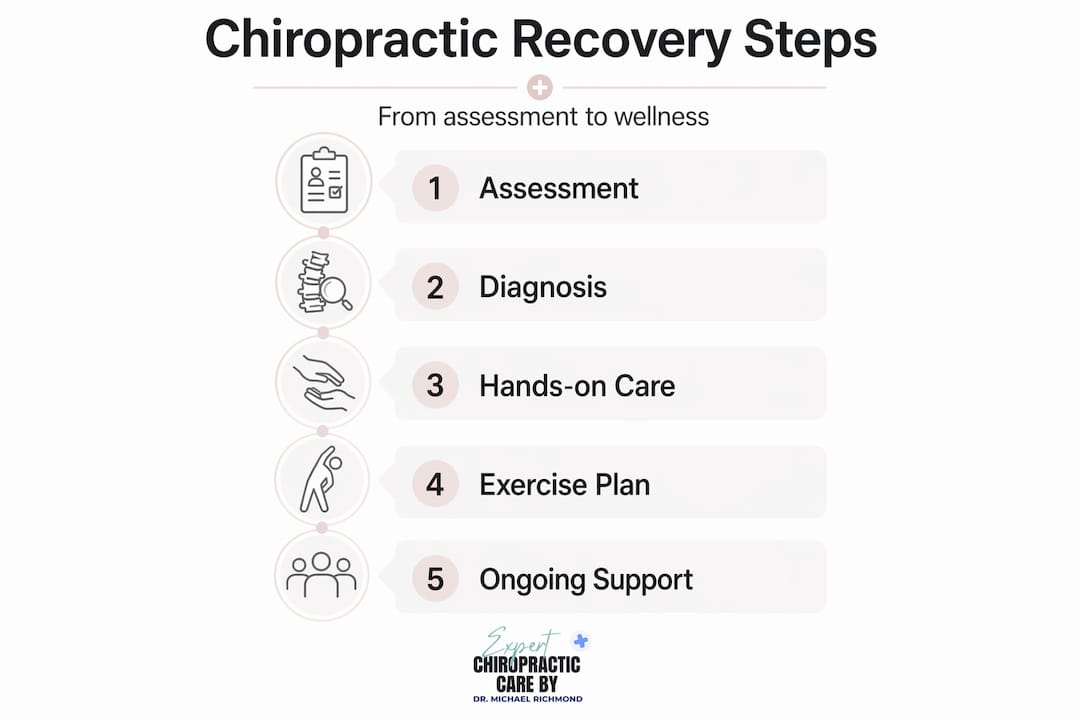
A well-designed chiropractic plan follows a clear progression. It is not an open-ended series of appointments with no defined goal. According to treatment plan research, a typical chiropractic plan includes an acute phase of 2 to 4 weeks focused on symptom reduction via spinal manipulation and soft tissue therapy, followed by a rehabilitative phase of 4 to 12 weeks with exercises.
Here is how those phases unfold:
- Initial examination: A comprehensive assessment covering your medical history, imaging if needed, neurological tests, and movement analysis to identify what is causing your pain and rule out conditions that require a different approach
- Acute care phase (weeks 1 to 4): Frequent visits (2 to 3 per week) using spinal adjustments and soft tissue work to reduce inflammation, improve mobility, and ease immediate pain
- Rehabilitative phase (weeks 4 to 16): Visits become less frequent as you take on more active work through targeted exercises, postural correction, and functional movement training
- Maintenance care (optional): Some patients choose periodic checkups to prevent recurrence, especially those with physically demanding jobs or ongoing postural challenges
| Phase | Duration | Focus | Visit frequency |
|---|---|---|---|
| Initial exam | 1 visit | Diagnosis and treatment planning | Once |
| Acute care | 2 to 4 weeks | Symptom relief, mobility restoration | 2 to 3x per week |
| Rehabilitative | 4 to 12 weeks | Exercise, function, stability | 1 to 2x per week |
| Maintenance | Ongoing (optional) | Prevention and wellness | Monthly or as needed |
Every plan is built around the individual. A 28-year-old recovering from a rear-end collision will have a different plan than a 55-year-old managing chronic lumbar degeneration. For a detailed walkthrough of what each stage involves, the chiropractic treatment steps guide breaks it down practically. If your situation specifically involves an accident, the car accident chiropractic tips resource is worth reviewing before your first visit.
Pro Tip: Keep a simple symptom journal during your first two weeks of care. Rating your pain, stiffness, and sleep quality daily gives your chiropractor concrete data to adjust your plan faster.
Safety and risks of chiropractic care for pain management
Safety is the first question most patients ask, especially after an accident when they are already dealing with trauma. The evidence here is reassuring. Severe complications from spinal manipulation are extraordinarily rare. The risk of vertebral artery dissection from cervical spinal manipulation is estimated at approximately 1 in 5.85 million manipulations. For perspective, that is a lower risk profile than many common medications.
The most common side effects are mild and temporary:
- Post-treatment soreness in the treated area (similar to muscle soreness after exercise)
- Temporary stiffness that typically resolves within 24 to 48 hours
- Mild fatigue after the first few sessions as your body adapts
Research supports this safety record across diverse patient groups. Most adverse events in older adults receiving chiropractic spinal manipulation were mild to moderate, with no catastrophic events reported. That finding matters for accident recovery patients, who are often dealing with pre-existing conditions on top of new injuries.
The best protection is full disclosure. Telling your chiropractor everything about your accident, your symptoms, and your medical history is not optional. It is what allows them to customize your care safely.
Pre-manipulation screening is standard in responsible chiropractic practice. This means your chiropractor checks for red flags such as fractures, severe disc herniation, vascular conditions, or osteoporosis before applying any high-velocity technique. If a concern is identified, they will refer you to the appropriate specialist or modify treatment accordingly. For more on how safety standards apply in chiropractic settings, the chiropractic care safety overview covers these protocols in detail.
Maximizing recovery with chiropractic care after a car accident
Car accident injuries are deceptive. Whiplash, soft tissue tears, and spinal microtrauma often feel mild in the first 24 to 72 hours, then intensify as inflammation peaks. Seeking chiropractic care early, ideally within days of the accident, positions you for a faster and more complete recovery.
When preparing for your first visit, bring everything your chiropractor needs to build an accurate picture:
- The accident report and any photos from the scene
- All imaging (X-rays, MRI, CT scans) taken at the emergency room or urgent care
- A written timeline of when symptoms appeared and how they have changed
- A list of all current medications and supplements
- Any prior medical history related to your spine or joints
As Harvard Medical School guidance notes, for car accident recovery like whiplash, patients should disclose their full medical history and prior imaging. Treatment often starts with gentle mobilization before progressing to high-velocity adjustments. That sequencing protects you while still delivering real pain relief from the first visit.
Your recovery also depends on what you do between appointments. Follow through on prescribed exercises, avoid activities that re-aggravate the injury, get adequate sleep, and stay hydrated. These are not generic wellness tips. They directly affect how quickly your tissue heals and how well your nervous system responds to treatment. The chiropractic accident recovery resource and the guide on chiropractic methods for accident healing both offer practical support as you move through care.
Why chiropractic pain management is a smart choice for North Miami patients
Here is something most articles will not tell you directly: the quality of your initial examination predicts your outcome more than any individual technique. Research confirms that the strongest predictor of treatment success is the quality of the initial examination, which shifts the conversation from "does chiropractic work?" to "are you seeing a provider who examines thoroughly before treating?"
That reframe matters enormously for accident recovery patients in North Miami. You do not need the fanciest equipment or the most aggressive treatment schedule. You need a chiropractor who listens, examines carefully, and builds a plan around your specific injury pattern and recovery goals.
Chiropractic care also fits a practical reality for many North Miami residents. Unlike surgical pathways or specialist-driven pain management, you can access a chiropractor for pain management without a physician referral in Florida, which means faster access to care when timing matters most. And as chiropractors increasingly serve as primary providers for musculoskeletal conditions, the scope of what they assess and coordinate has expanded well beyond adjustments alone.
What we see consistently is that patients who show up as partners in their recovery do better. They ask questions. They do their exercises. They communicate honestly about what is improving and what is not. Chiropractic care is not something done to you. It is something you engage with actively. That distinction separates patients who recover fully from those who plateau.
Find affordable chiropractic care for pain management in North Miami
If you have been dealing with pain since a car accident, or if chronic back and neck pain is limiting your daily life, the most important next step is getting a thorough evaluation from a licensed chiropractor who specializes in exactly your situation.

SparkMed in North Miami offers experienced, licensed chiropractic care focused on accident recovery and musculoskeletal pain, with treatment plans built around your specific needs. The clinic provides adjustments starting at $25 and does not require insurance to get started, removing one of the biggest barriers to care. Whether you need post-accident whiplash treatment, spinal decompression, or a structured rehab program, the team is equipped to guide you from acute pain through full recovery. Visit the local chiropractic resources section for educational content, treatment guides, and easy appointment booking to take your first step toward drug-free, lasting pain relief.
Frequently asked questions
Is chiropractic care safe after a car accident?
Yes, chiropractic care is generally safe after a car accident when performed by licensed professionals who conduct thorough exams to tailor treatment and avoid risks. Pre-manipulation vascular screening is critical, and any identified risk factors warrant referral or modification to ensure your safety.
How long does a chiropractic pain management plan usually take?
Plans typically last 6 to 16 weeks, starting with 2 to 4 weeks of symptom relief followed by 4 to 12 weeks of rehabilitation, personalized to your specific condition. A typical treatment plan is structured to progress your recovery in measurable phases, not just manage symptoms indefinitely.
What conditions does chiropractic care help with most effectively?
Chiropractic care is most effective for acute and chronic low back pain, neck pain, and musculoskeletal issues without serious structural damage. Spinal manipulation works best for neuromuscular dysfunction rather than structural pathology, improving pain and function in both areas.
Will chiropractic care replace the need for medications?
For many patients, chiropractic pain management reduces or eliminates the need for pain medications by addressing underlying neuromuscular causes safely and effectively. Clinical guidelines now place spinal manipulation alongside exercise and acupuncture due to favorable risk profiles compared to pharmacologic care.