
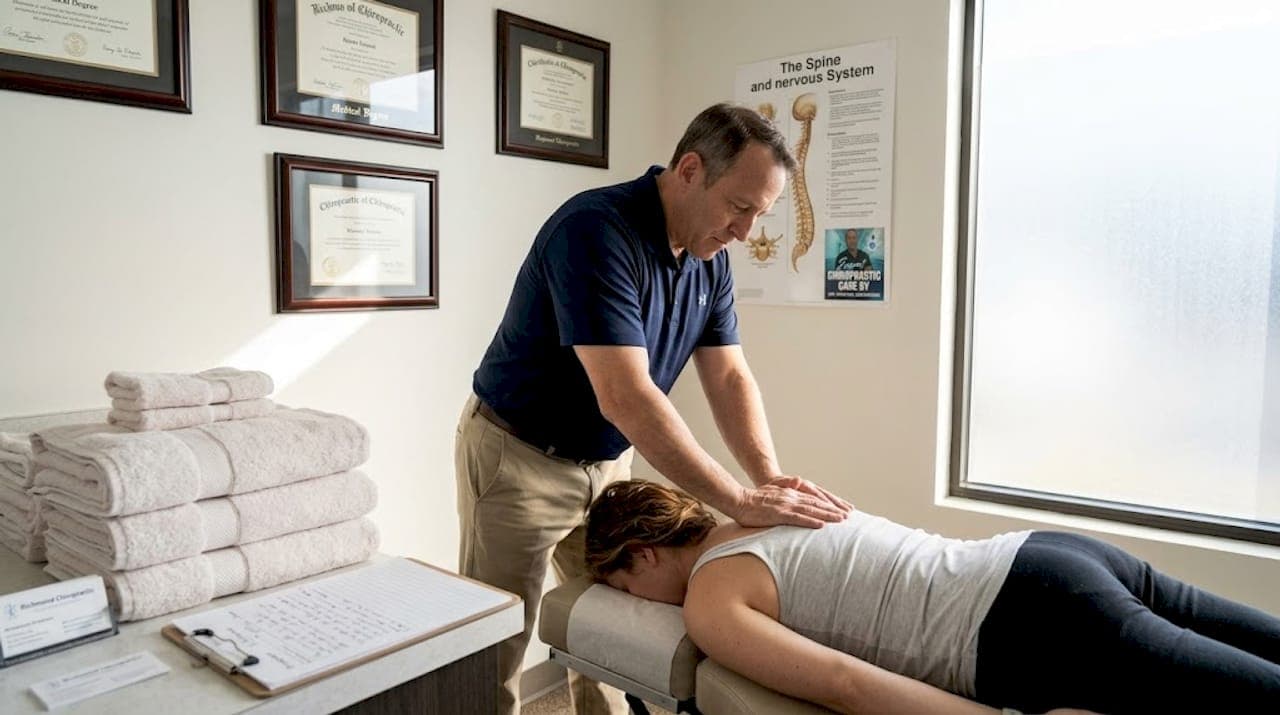
After a car accident, most people assume massage is something you book once the hard medical work is done, a nice treat to help you relax. That assumption is costing accident survivors real recovery time. Chiropractic massage is not a spa service. It is a clinically applied soft-tissue therapy that, when combined with spinal adjustments and targeted exercise, directly addresses the muscle damage, inflammation, and restricted movement that follow trauma. If you are in North Miami and you are looking for affordable, effective care that gets you back to normal faster, this guide breaks down exactly how chiropractic massage works, when it helps most, and how to build a recovery plan around it.
Table of Contents
- What is chiropractic massage and how does it help after a car accident?
- When is chiropractic massage most effective after an accident?
- How chiropractic massage fits into multimodal recovery plans
- Limits, cautions, and evidence-based expectations
- Getting the best results: Affordable strategies for North Miami survivors
- What most guides miss about chiropractic massage after car accidents
- Take the next step in your North Miami recovery journey
- Frequently asked questions
Key Takeaways
| Point | Details |
|---|---|
| Not just relaxation | Chiropractic massage is an evidence-based part of multimodal injury recovery plans after car accidents. |
| Best with other therapies | It works best when combined with spinal adjustments, exercise guidance, and education. |
| Small but real benefits | Expect modest, short-term improvements rather than miracle results from massage alone. |
| Safety matters | Never begin massage after a car accident without medical clearance to rule out serious injuries. |
| Affordability strategy | The smartest value comes from multimodal plans and clear communication with your provider. |
What is chiropractic massage and how does it help after a car accident?
Chiropractic massage is not the same as a general relaxation massage at a day spa. It is a targeted soft-tissue therapy applied by a licensed chiropractor or a therapist working directly under chiropractic supervision. The goal is not relaxation. The goal is to address the specific mechanical problems your body develops after a traumatic event like a car crash.
When your body absorbs the force of a collision, muscles contract involuntarily to protect your spine. That protective response is helpful in the moment, but it creates lasting tightness, trigger points (knots of contracted muscle fiber), and adhesions (bands of scar-like tissue that form between muscles and surrounding structures). These do not resolve on their own quickly, and they interfere with the spinal adjustments your chiropractor is trying to make.
Soft-tissue therapy reduces muscle spasm and addresses soft-tissue injury while improving mobility, typically as a direct complement to spinal and manual chiropractic approaches. In other words, the massage makes the adjustment work better, and the adjustment makes the massage more effective. They are designed to work together.
Here is what chiropractic massage directly targets after an accident:
- Muscle spasms and guarding: The involuntary tightening your body uses to protect injured areas
- Trigger points: Concentrated areas of tension that send referred pain to other body parts
- Circulation restriction: Areas where blood flow has been reduced due to swelling or compression
- Scar tissue formation: Early intervention can limit how much restrictive scar tissue develops
- Range of motion loss: Tight soft tissue physically prevents full spinal movement
The physiological effects are measurable. Massage therapy increases blood flow and oxygenation, clears metabolic byproducts from damaged tissue, reduces swelling and edema (fluid buildup), and cuts down on stiffness. These are not vague wellness claims. These are documented mechanisms that explain why patients move better and hurt less after targeted soft-tissue work.
Understanding the chiropractic terms explained in a clinical context helps you have smarter conversations with your provider. And knowing what chiropractic care involves from the start means you can advocate for the right combination of services from day one.
Clinical note: Think of chiropractic massage and spinal adjustment as two halves of the same tool. The adjustment repositions the joint. The massage releases the tissue pulling that joint back out of place. Without both, you are only solving half the problem.
Having clarified the value of massage in a clinical context, let's next examine when and why chiropractic massage is most effective for post-accident injuries.
When is chiropractic massage most effective after an accident?
Timing matters more than most patients realize. Starting massage too soon after a crash, before a proper assessment, can aggravate an injury that needs stabilization first. But waiting too long allows scar tissue to harden and muscle compensation patterns to become entrenched. The sweet spot requires both medical clearance and prompt action.
Chiropractic massage is particularly powerful for these post-accident injury types:
- Whiplash (cervical acceleration-deceleration injury): The rapid forward-backward motion of the head in a rear-end collision creates intense muscle strain in the neck, upper back, and shoulders. Massage directly targets the muscles that go into protective spasm after this type of trauma.
- Neck pain with restricted rotation: If you cannot turn your head fully without pain, muscle tightness is almost always contributing. Massage reduces that restriction faster than rest alone.
- Mid and lower back strain: The lower lumbar muscles take enormous force during side-impact and rear-end crashes. Soft-tissue work here reduces the guarding that makes spinal adjustments difficult.
- Shoulder and upper arm tension: Bracing against the steering wheel or dashboard causes acute muscle overload that responds well to targeted soft-tissue therapy.
- Headaches with a muscular origin: Tension headaches triggered by neck and upper back tightness after a crash often resolve with consistent chiropractic massage when combined with cervical (neck) adjustment.
Guideline-consistent care for whiplash is specifically described as multimodal, meaning it combines manual therapy with therapeutic exercise and self-management guidance. This is not a single-clinic opinion. It is what current clinical practice guidelines recommend based on collected research.
Pro Tip: Before your first massage session after an accident, write down your top three symptoms, where you feel them, how they change throughout the day, and what makes them worse. This information helps your chiropractor personalize the soft-tissue work rather than using a generic protocol.
Exploring chiropractic methods after car accidents gives you a clearer sense of all the tools available in a well-designed recovery plan. And understanding how pain relief and rapid recovery connect helps you set realistic, motivating goals for each phase of care.
How chiropractic massage fits into multimodal recovery plans
The word "multimodal" (meaning multiple treatment methods combined) comes up constantly in car accident recovery guidelines, and for good reason. No single therapy does everything. Here is a direct comparison of what a massage-only approach provides versus what a structured multimodal chiropractic plan delivers:
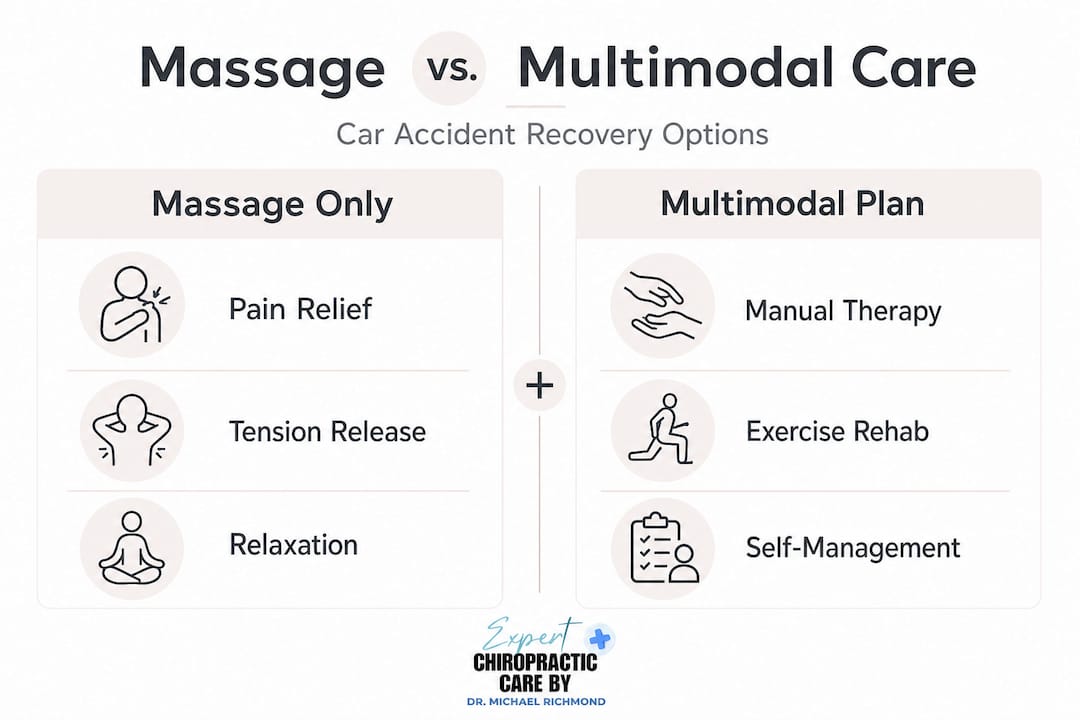
| Component | Massage only | Multimodal chiropractic plan |
|---|---|---|
| Soft-tissue tension relief | Yes | Yes |
| Spinal joint mobility | No | Yes (adjustments) |
| Posture and movement re-education | No | Yes (exercise guidance) |
| Inflammation management | Partial | Comprehensive |
| Long-term function improvement | Limited | Stronger evidence base |
| Scar tissue prevention | Partial | Stronger with combined care |
| Affordability and value | Variable | Higher when strategically designed |
The logic behind combining these elements is straightforward. Chiropractic manual therapy paired with massage addresses both joint mechanics and soft-tissue problems simultaneously, restoring range of motion and supporting the healing process in ways neither approach achieves alone.
A well-built multimodal plan for a North Miami car accident patient typically includes these components:
- Initial assessment: Identifying the specific injuries, severity, and any red flags that require medical referral
- Spinal and manual adjustments: Restoring joint position and mobility in the spine and related structures
- Chiropractic massage and soft-tissue work: Releasing muscle tension, reducing swelling, and improving circulation
- Therapeutic exercise: Rebuilding strength and stability so the adjusted joints hold their position
- Self-management education: Teaching you what to do at home between visits to maintain progress
The self-management piece is frequently underestimated. The evidence is clear that pairing soft-tissue massage with manual therapy and exercise guidance produces the most effective and cost-efficient outcomes. What you do between appointments matters as much as what happens in the treatment room.
Looking at affordable chiropractic techniques helps you understand which specific methods deliver the best value. And reviewing the range of chiropractic treatment types available for injury recovery lets you ask smarter questions when building your plan.
Limits, cautions, and evidence-based expectations
Honesty matters here. Chiropractic massage is a valuable tool, but it is not a cure-all, and any clinic that presents it as one is doing you a disservice. Setting realistic expectations is not pessimism. It is the foundation of a plan that actually works.
Here is an honest look at what the evidence says:
| Benefit area | Strength of evidence | Duration of benefit |
|---|---|---|
| Short-term pain reduction | Moderate | Days to weeks |
| Improved range of motion | Moderate | Weeks (with continued care) |
| Reduction in muscle spasm | Moderate to strong | Session to session |
| Long-term function improvement | Mixed | Requires full multimodal plan |
| Prevention of chronic pain | Limited but promising | Depends on patient factors |
The Cochrane review on spinal manipulative therapy for chronic low back pain found that effectiveness across rigorous trials has not been fully convincing. That is an important nuance. It does not mean these therapies do not help. It means the benefit is real but often modest, particularly when care is not well structured.
Similarly, research on combined chiropractic interventions for musculoskeletal pain generally supports expecting small to moderate short-term benefits, with variable certainty depending on the specific condition and the quality of the care plan.
Red flags that mean you need medical care before any massage:
- Loss of sensation or numbness in your limbs, fingers, or toes
- Severe, unrelenting pain that does not change position
- Weakness in your arms or legs that was not present before the accident
- Bladder or bowel changes following a crash (requires emergency evaluation)
- Dizziness, vision problems, or difficulty swallowing after a neck injury
These symptoms require a physician's clearance before soft-tissue therapy begins. Understanding why chiropractic care matters in accident recovery also means understanding when to refer out.
Pro Tip: Ask your chiropractor directly: "What is the specific goal for my massage sessions this week, and how will we know if we are making progress?" A good provider answers with clear, measurable benchmarks, not vague reassurances.
Getting the best results: Affordable strategies for North Miami survivors
North Miami car accident survivors face a real challenge: getting high-quality, evidence-based care without breaking the bank, especially during the uncertainty that follows a crash. Here is how to approach that strategically.
- Start with a full assessment, not just massage: An accurate diagnosis directs every treatment decision that follows. Skipping the assessment to save money upfront usually costs more later.
- Ask specifically about multimodal plans: Call the clinic and ask if their post-accident plans include massage, manual therapy, exercise guidance, and home care education. If the answer is just massage, look elsewhere.
- Check your Personal Injury Protection (PIP) coverage: Florida law requires PIP insurance on all vehicles, which typically covers 80% of reasonable medical expenses including chiropractic care after accidents. Most clinics that specialize in accident recovery handle this paperwork for you.
- Prioritize technique and dosage over frequency: Getting the right combination of care with appropriate dosage and timing matters far more than how many sessions you book. Ten well-designed sessions beat twenty poorly targeted ones every time.
- Ask about payment options upfront: Many North Miami chiropractic clinics offer flexible payment plans for patients whose cases are pending insurance resolution. Do not let assumed cost stop you from seeking care.
- Do the home exercises: This sounds basic, but patients who follow through on self-management guidance between visits consistently recover faster than those who rely entirely on in-office treatment.
The goal of long-term chiropractic wellness after an accident is not just getting out of pain quickly. It is restoring full function so you do not develop chronic issues months later. And consistent chiropractic follow-up accelerates that process by catching setbacks early and adjusting the plan when needed.
Pro Tip: Bring your accident report and any ER discharge notes to your first chiropractic appointment. This gives the chiropractor a complete clinical picture and speeds up the assessment process significantly.
What most guides miss about chiropractic massage after car accidents
Here is the uncomfortable truth that most recovery guides gloss over: chiropractic massage works best when you treat it as one component of your active participation in recovery, not something that happens to you while you lie on a table.
We see this constantly in clinical practice. Patients who engage with their care, who ask questions, do their exercises, modify their activity appropriately, and communicate clearly about what is and is not working, recover faster and more completely than patients who show up for appointments and wait to be fixed. The hands-on therapy is the catalyst. You are the engine.
Another thing most guides will not say directly: some clinics oversell the benefits of massage because it is a revenue-generating service. You deserve transparent communication about what a specific course of treatment is expected to achieve and by when. If a provider cannot give you benchmarks, that is a red flag.
Restoring spinal health after a car accident is a process that unfolds over weeks, not days. The goal of chiropractic massage within that process is to remove specific barriers to healing, not to be the entire solution. Time, active rehabilitation, and realistic lifestyle adjustments during recovery are equally important. The patients who get the best outcomes understand this and build their recovery plan accordingly.
Take the next step in your North Miami recovery journey
If you have been in a car accident and you are still dealing with pain, stiffness, or restricted movement, you do not have to figure this out alone. The right plan combines assessment, chiropractic adjustment, targeted massage, and exercise guidance into a coordinated approach that addresses your specific injuries.
At Spark Med in North Miami, we specialize in exactly this kind of strategic, multimodal recovery for accident survivors. Our team brings together affordable pricing (including a $25 adjustment option with no insurance required), experienced practitioners, and a care model built on what the evidence actually supports. Visit our blog for more detailed guidance on every aspect of post-accident recovery, from your first appointment to your final follow-up. When you are ready to take a concrete next step, our team is here to build a plan around your specific injuries and goals.
Frequently asked questions
Is chiropractic massage safe right after a car accident?
Chiropractic massage is safe only after a medical professional rules out severe injuries like fractures or neurological issues. Always confirm that there are no red flag symptoms before beginning any soft-tissue therapy.
How quickly can I expect results from chiropractic massage?
Most people notice small improvements in pain and mobility within a few sessions, but the evidence supports expecting modest short-term benefits that deepen over time when combined with a complete multimodal care plan.
What should I look for in an affordable chiropractic massage plan?
Choose a clinic that offers a full multimodal plan including assessment, manual therapy, soft-tissue massage, exercise, and patient education. Multimodal schedules pairing massage with manual therapy and education consistently produce the best value and outcomes.
Does insurance cover chiropractic massage after a car accident?
Florida's PIP coverage typically covers 80% of reasonable medical expenses including chiropractic and massage care when injuries are documented as medically necessary. Check with your insurer about specific documentation requirements and visit limits.
Can chiropractic massage fully replace other treatments?
No. It works best as one component of a multimodal guideline-consistent plan that includes manual therapy, therapeutic exercise, and self-management education. Using massage alone for car accident recovery leaves the most important parts of healing unaddressed.